Mythical, life-giving, eternally fascinating: the Nile is not just a river; it is the backbone of a civilization that continues to captivate travelers from around the world. From Luxor to Aswan, its banks reveal ancient temples, unspoiled villages, and landscapes where the desert meets the palm groves. But there are countless ways to cruise this legendary river. Whether aboard a steamboat steeped in history, a traditional dahabieh, or a floating palace, each Nile cruise offers a unique perspective on Egypt: contemplative, cultural, intimate, or decidedly luxurious.
Lazuli Travel Bureau: The Nile, Just Like the Travelers of the 19th Centuryᵉ century
Lazuli Travel Bureau’s approach to travel seems to belong to another era. Here, there are no massive cruise ships lined up alongside dozens of others in front of the temples, but rather dahabiehs—those elegant traditional sailboats that were once the preferred mode of transportation for explorers, archaeologists, and wealthy travelers. Founded in 2001 by Wally Aziz, a former Egyptologist and tour guide, the company has made a choice that has become rare: to offer only these wooden boats with lateen sails, capable, when the wind is right, of gliding silently up the river. It’s an infinitely more contemplative experience, where the journey returns to its original rhythm.
On board, every detail is designed to preserve that sense of exclusivity. Dahabiehs have only five to ten cabins, which allows for both a luxury cruise more intimate than a full charter for a family or group of friends. The atmosphere is more reminiscent of an elegant houseboat than a cruise ship: light-colored wooden decks, linen-upholstered chaise longues, bouquets of papyrus, lounges opening onto the landscape, and, on some units, a jacuzzi facing the river. The aft suites, bathed in light thanks to their panoramic windows, offer a spectacular view of the riverbanks gliding by.
But what truly sets Lazuli apart is undoubtedly its approach to Egypt. Each tour is led by a dedicated guide who orchestrates the entire trip, from sightseeing to transfers, including priority access to sites. Between Luxor and Aswan, the major landmarks—Karnak, the Valley of the Kings, Edfu, Kom Ombo, and Philae—are interspersed with much more off-the-beaten-path stops: a fishing island, a Nubian village, breakfast served on a sandbar, a swim in the Nile, or an impromptu dinner on the riverbank. Even the meals tell the story of the country, featuring local cuisine prepared with ingredients purchased at each stop. More than just a cruise, Lazuli offers a deeply human immersion, where the river once again becomes the thread that weaves together a vibrant Egypt.
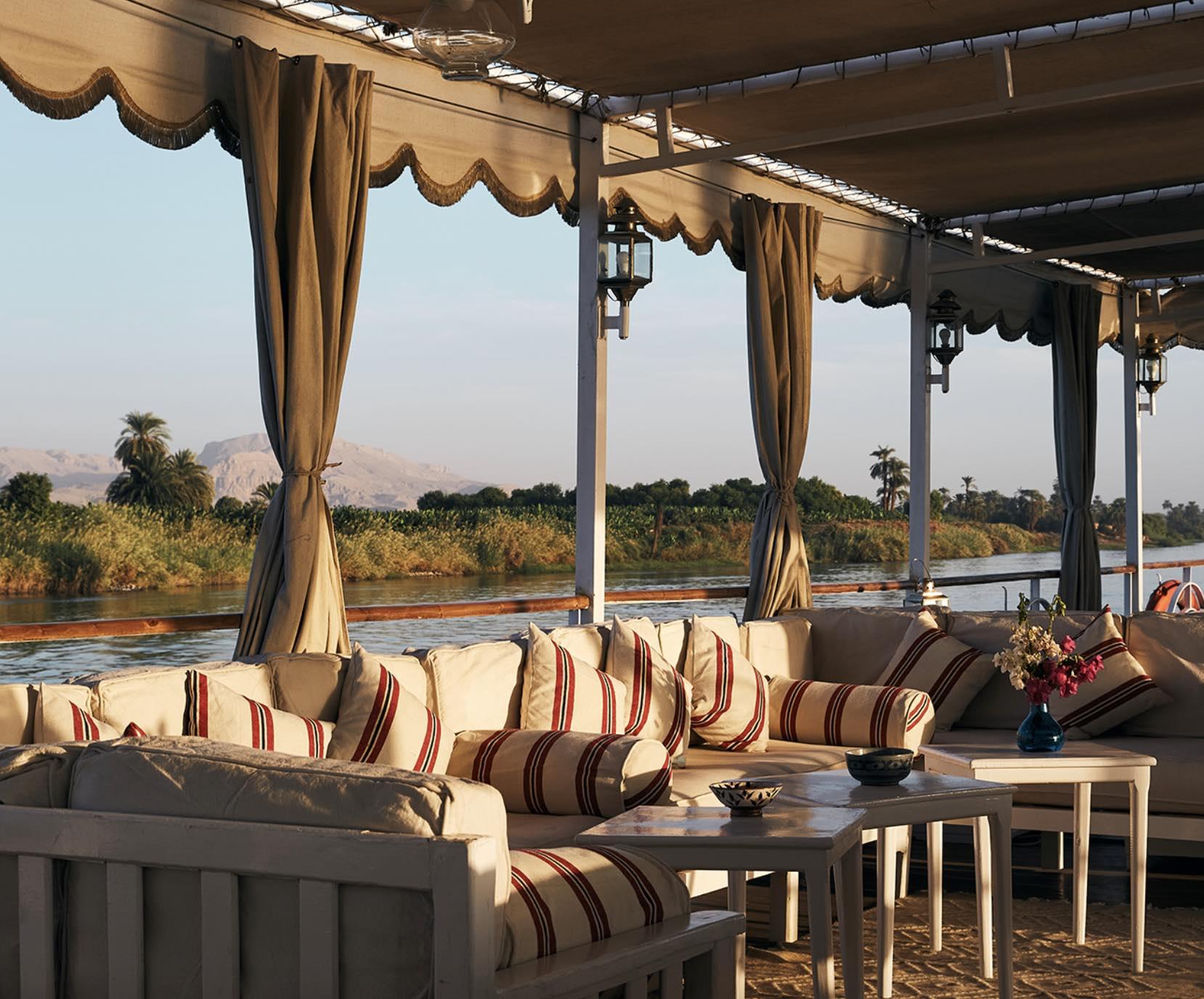
One of the most beautiful luxury cruises on the Nile © Lazuli Nile Cruises
CroisiEurope: A Grand Journey to the Heart of Pharaonic Civilization
For those who dream of discovering the great sites of ancient Egypt without sacrificing the comfort of a perfectly organized cruise, CroisiEurope offers a particularly comprehensive itinerary between Cairo, Luxor, and Aswan. More than just a cruise, the journey takes the form of a true historical odyssey, with each day shedding light on a new chapter in one of the world’s most fascinating civilizations.
Aboard the RV Star of Luxor, a five-anchor ship with 53 cabins and 8 suites, the atmosphere remains deliberately intimate despite amenities worthy of larger river cruise ships. The large floor-to-ceiling windows in the restaurant, lounge, and library ensure that the Nile is always in view, while the upper deck, with its swimming pool, his hot tub and its sun deck invite you to enjoy the ever-changing scenery of the palm groves, villages, and temples that dot the riverbanks.
The itinerary naturally highlights the must-see sites: Karnak, Luxor, Edfu, Kom Ombo, Philae, and the Valley of the Kings, where you’ll explore several tombs, including that of Seti I. But the tour company also enriches the experience with lectures led by an Egyptologist, encounters with locals in Upper Egypt, and a few more unexpected highlights, such as a ride on a traditional boat around Elephantine Island followed by tea time with a view of Aswan’s granite landscapes. Those who wish can even extend their immersion by attending the sound-and-light show at the Temple of Karnak.
This comprehensive itinerary will appeal to travelers eager to experience Egypt in all its richness, combining river cruises, guided tours, and leisure time. A reassuring and generous package that allows you to explore the major highlights of the Nile Valley at a leisurely pace while benefiting from CroisiEurope’s logistical expertise.
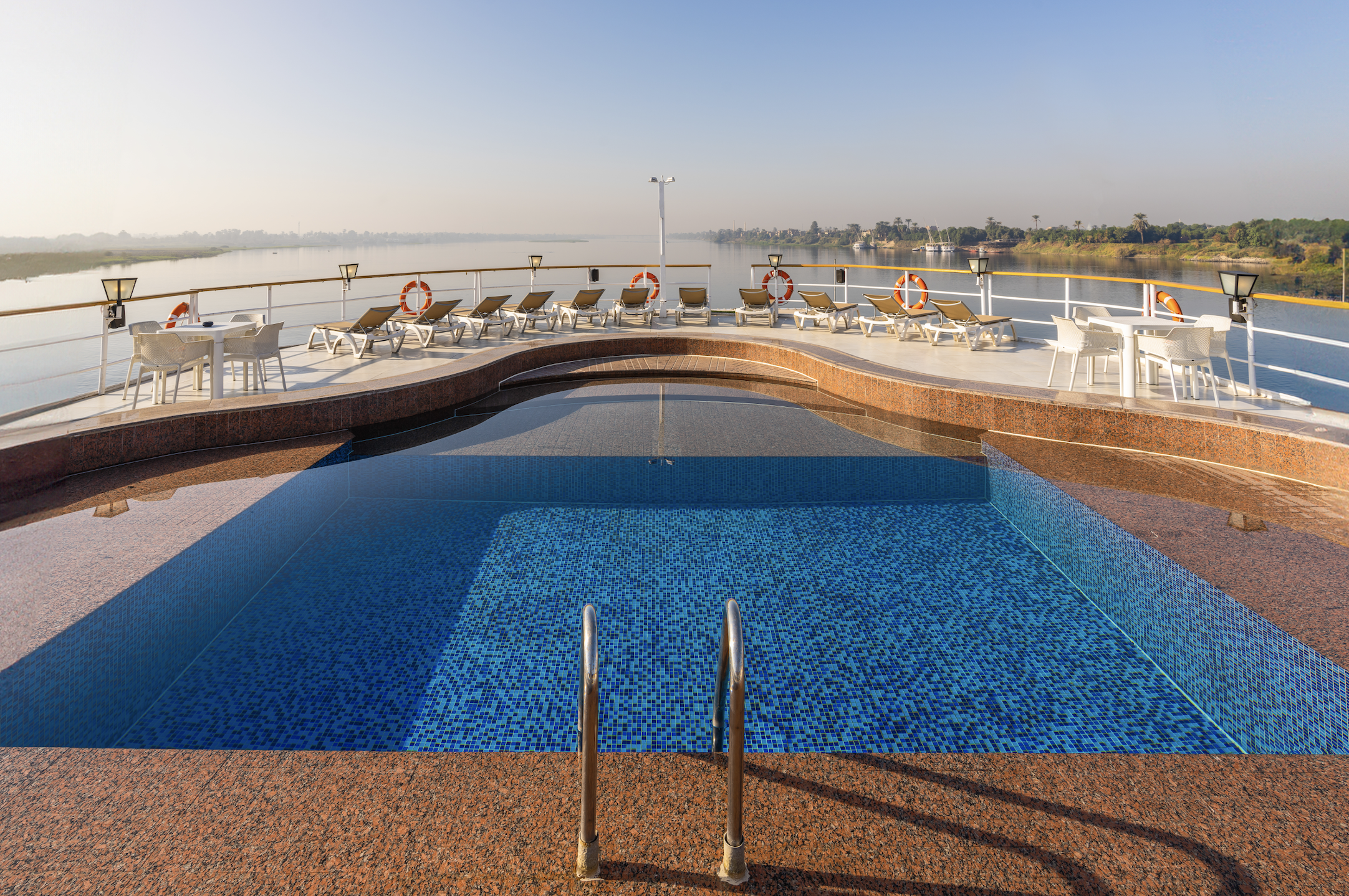
The pool on the RV Star of Luxor © CroisiEurope
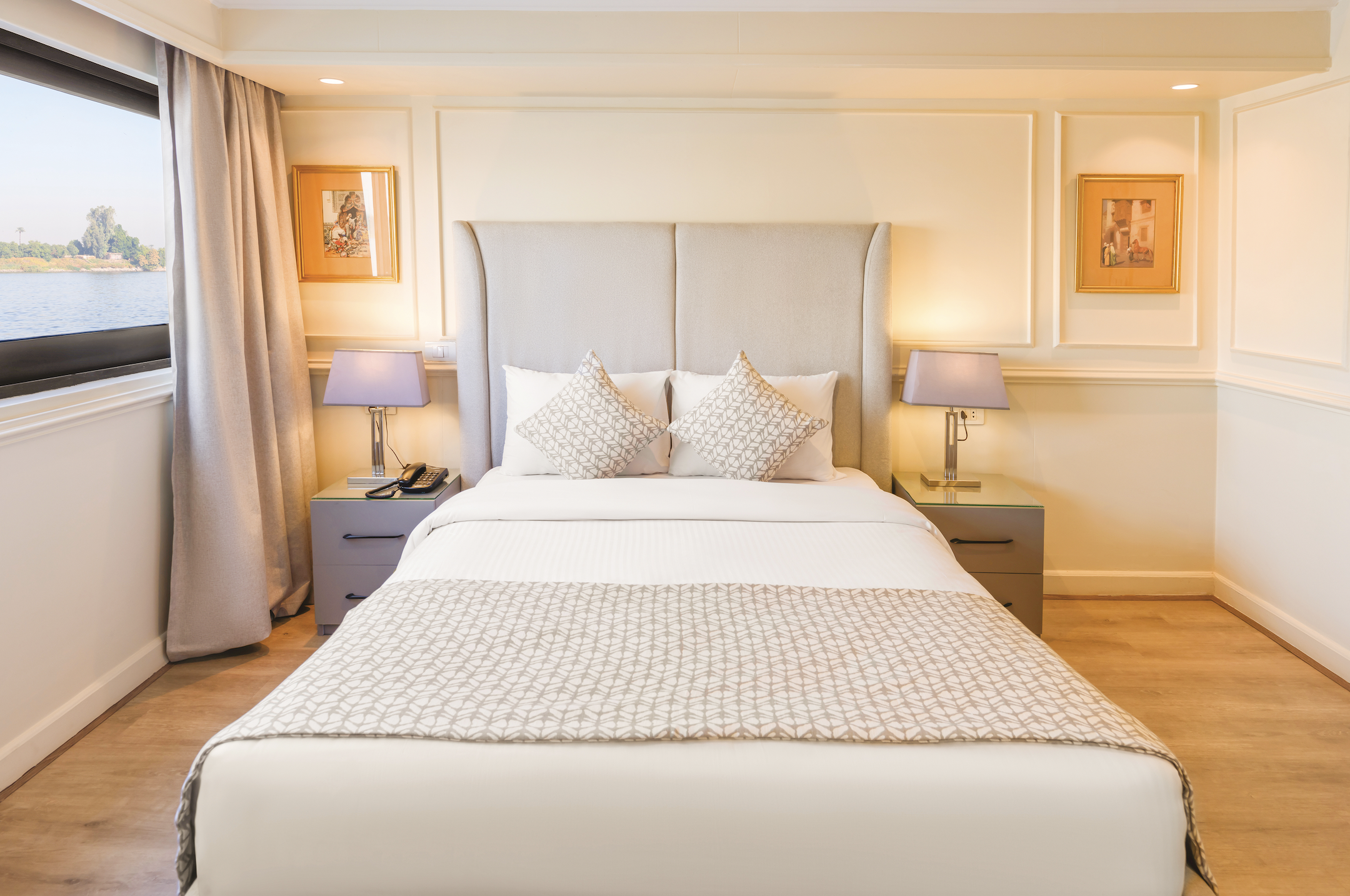
One of the cabin suites on the RV Star of Luxor © CroisiEurope
Steam Ship Sudan: The Nile as It Was in Agatha Christie's Day
Some ships carry passengers. Others carry an entire era. The Steam Ship Sudan belongs to the latter category. With its weathered wood paneling, teak decks, natural-fiber armchairs, and English-club-style lounges, this century-old steamship seems to have defied the passage of time. Stepping aboard is like rediscovering the charm of the great Egyptian expeditions of the early 20thᵉ century, when diplomats, artists, and writers came to the banks of the Nile in search of inspiration and wonder.
Built in 1885, the ship became a true legend after hosting Agatha Christie and her husband, the archaeologist Max Mallowan, on a voyage in 1933. The novelist is said to have drawn inspiration from it for Death on the Nile, making the ship an integral part of the Egyptian imagination. Even today, the atmosphere evokes that of the 1930s: the 23 cabins and suites retain their original wood paneling, colorful fabrics, and elegant furnishings. Among them, the Agatha Christie Suite (naturally), located at the bow, offers a spectacular view of the river and its ever-changing landscapes.
On board, the pace is deliberately slow. The Steam Ship Sudan cruises at about 9 km/h, giving passengers time to observe daily life unfolding along the riverbanks: fishermen casting their nets, children playing near the water, and birds flying through the palm groves. Between Luxor and Aswan, the six-day itinerary reveals the great treasures of Upper Egypt: the Valley of the Kings, the temples of Edfu and Kom Ombo, Luxor, and Philae, with the option to extend the adventure all the way to Abu Simbel.
As evening falls, cocktails on deck, dinners inspired by local traditions, and conversations in the lounges extend this timeless escape. More than just a luxury cruise, the Steam Ship Sudan offers a cinematic experience: the chance to travel up the Nile, following in the footsteps of travelers of yesteryear.
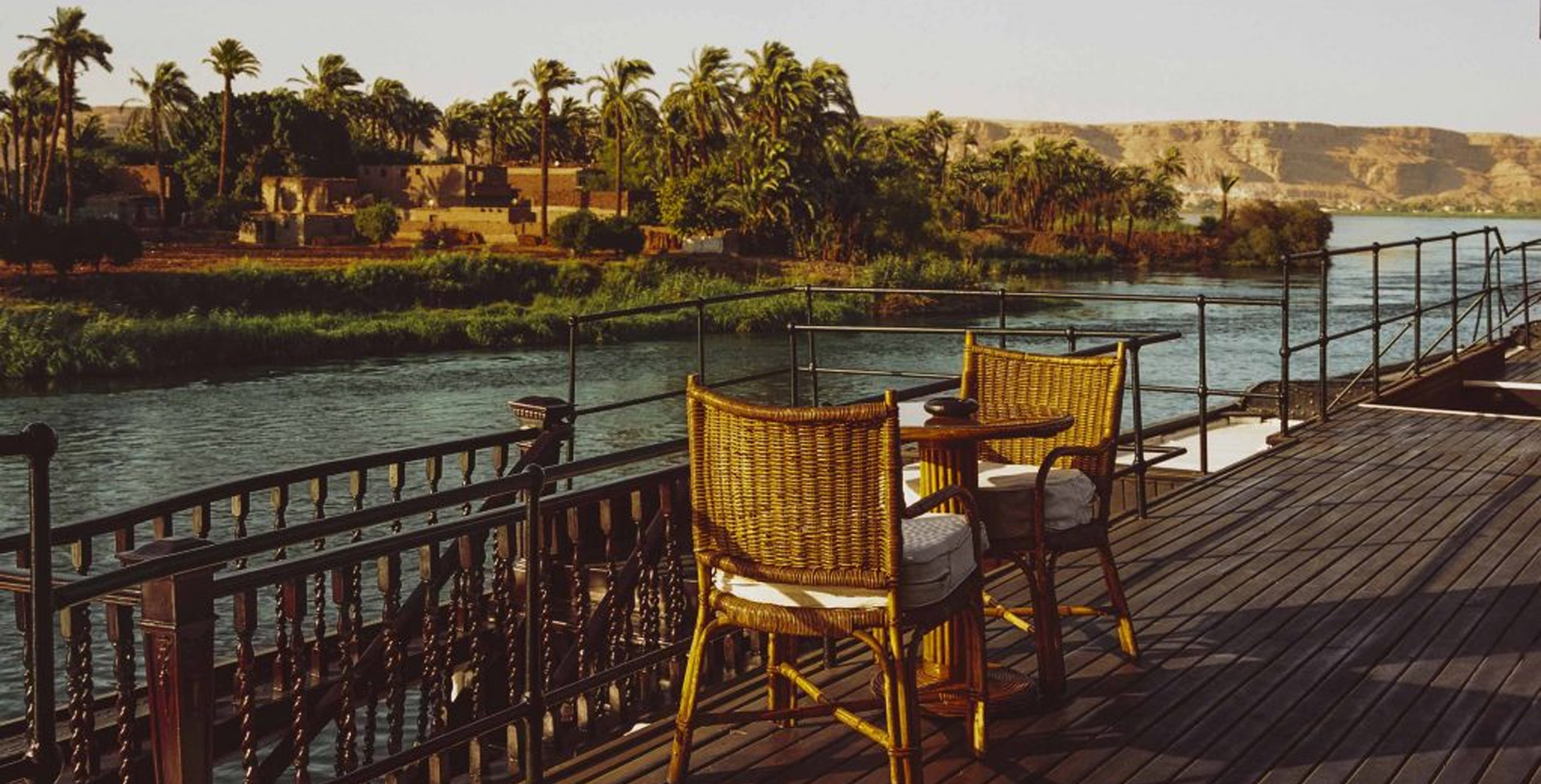
©Steam Ship Sudan
The Oberoi Zahra, the floating palace on the Nile
On the Nile, some cruises prioritize authenticity, while others opt for absolute refinement. The Oberoi Zahra undoubtedly falls into the latter category. True to the standards of the Indian Oberoi group, this ship 5 stars transforms the cruise between Aswan and Luxor into a true luxury hotel experience, where every detail is designed to combine cultural exploration with contemporary comfort.
With just 28 cabins and suites, all of which open onto the river through large panoramic windows, the ship prioritizes space and privacy. The accommodations boast sizes rarely seen on the Nile, ranging from 26 to 115 m² for certain suites, featuring elegant bathrooms, high-quality materials, and—for the most exclusive categories—private terraces with a jacuzzi. The whole experience feels more like a floating boutique hotel than a simple cruise ship.
On board, the journey continues in a spirit of serenity. The pool on the upper deck becomes a haven between temple visits, while the spa offers massages and treatments inspired by Asian traditions, complemented by a fitness center with a view of the river. Whether in the library or around the restaurant, the atmosphere remains cozy, with refined cuisine blending Egyptian and international influences, prepared by Oberoi chefs from a menu that changes daily.
But the experience also depends on the quality of the shore excursions. Accompanied by English-speaking Egyptologists, passengers explore the major sites of Upper Egypt via organized transfers in small private vehicles: the temples of Karnak and Luxor, the Valley of the Kings, Edfu, Kom Ombo, and Philae. Audiovisual presentations complement the tours, providing a deeper understanding of the millennia-old history that unfolds along the way.
With its three- to four-night itineraries between Aswan and Luxor, The Oberoi Zahra is designed for travelers who wish to discover ancient Egypt without ever compromising on the standards of a world-class international hotel. It’s a particularly elegant way to follow the course of this legendary river.
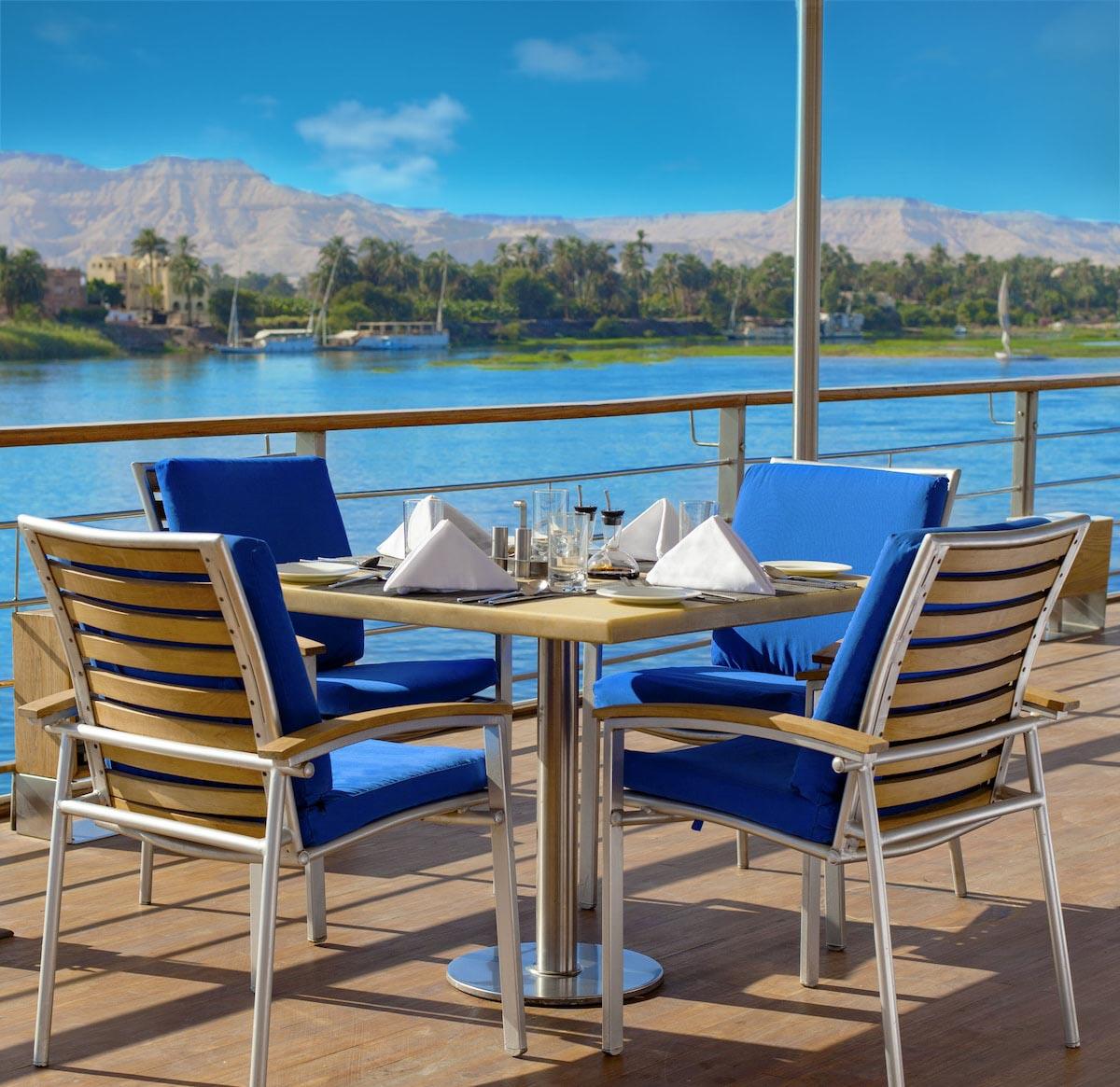
A Cruise in Egypt © The Oberoi Zahra
Nour El Nil: The Magic of Sailing on the Nile
Before it became a tourist route, the Nile was a living river, flowing to the rhythm of the wind and the seasons. It is precisely this intimate connection with the river that Nour El Nil seeks to rediscover. For more than twenty years, the company founded by Enrique, Eléonore, and Memdouh has offered a different way to discover Egypt: aboard traditional dahabiehs, two-masted sailboats that allow travelers to cruise slowly, far from the usual tourist routes.
The idea is simple: take your time. Between Esna and Aswan, the cruise spans nearly six days on the water, offering a much deeper immersion in the landscapes of Upper Egypt. Must-see stops—Edfu, Kom Ombo, Gebel Silsileh—alternate with more off-the-beaten-path stops, accessible only via these small boats capable of getting close to villages and unspoiled riverbanks. The journey then becomes a series of encounters: local markets, farmers tending their fields, Nile fishermen, and scenes of daily life.
The Nour El Nil dahabiehs combine the charm of traditional architecture with contemporary comfort. Each boat has its own personality, but they all share the same aesthetic: bright cabins with clean lines, hardwood floors, large windows overlooking the water, and an upper deck furnished with sofas and relaxation areas. Here, luxury is less about opulence than about a sense of space, freedom, and connection with the surroundings.
The kitchen fully embraces this philosophy. Meals are prepared using fresh ingredients purchased daily from farmers and fishermen we meet along the river. Fish from the Nile, homemade falafel, seasonal vegetables, and Egyptian specialties come together to create a generous, simple, and deeply local dining experience.
With its leisurely pace and respectful approach to the region, Nour El Nil offers a unique perspective on travel in Egypt: less a series of monuments and more a true immersion in a river, a culture, and a people. An experience for those who prefer to listen to the Nile rather than simply travel along it.
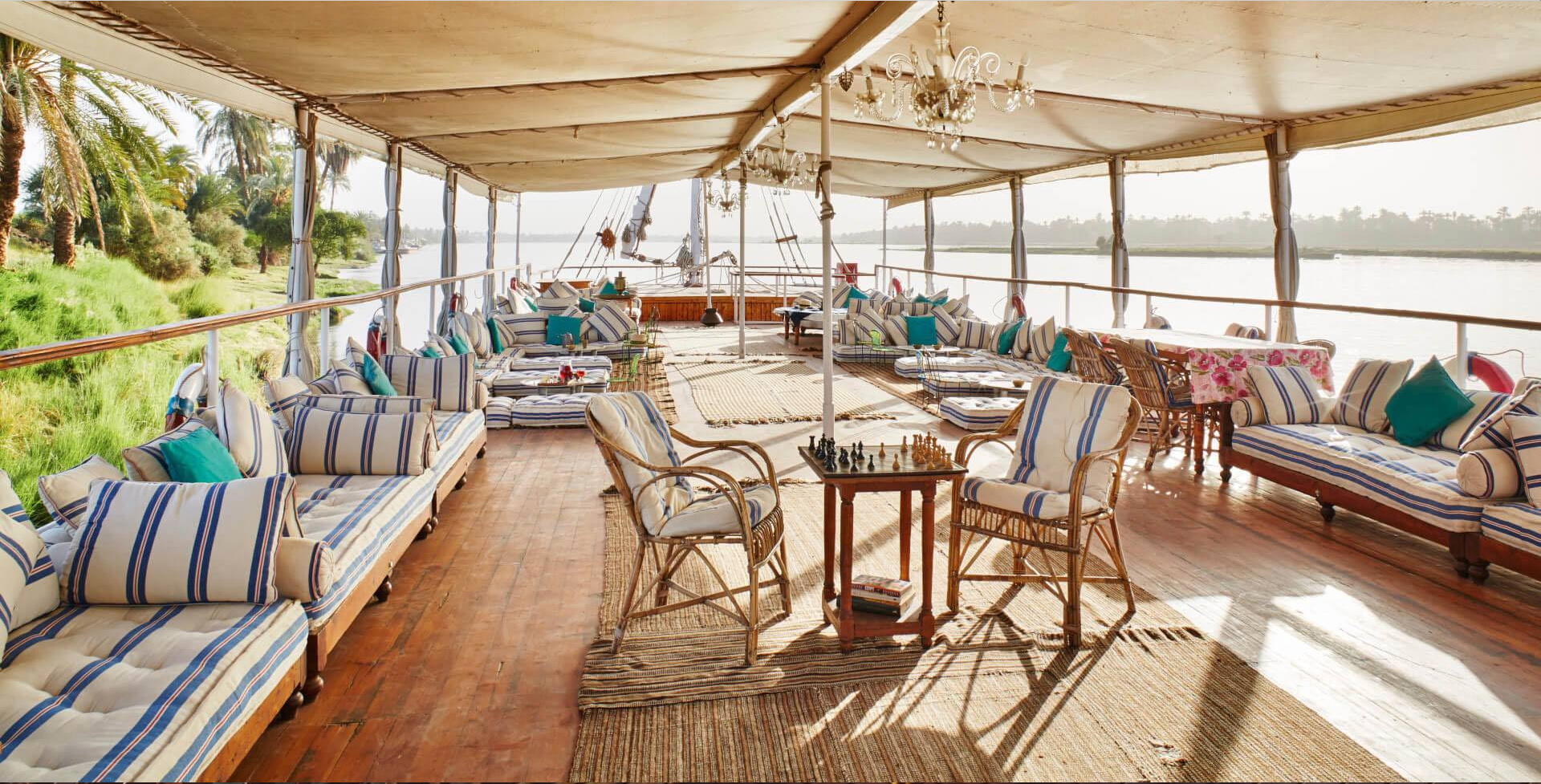
© Nour el Nil