A Venetian palace, a Milanese seminary, a Sicilian convent, a family villa in an olive grove: almost all of these places had a past life before becoming some of Italy’s most beautiful hotels. Ten places where you can stay in a piece of history that’s been restored, with traces of its former life still visible beneath the modern comforts.
7Pines Resort Sardinia, the resort overlooking La Maddalena
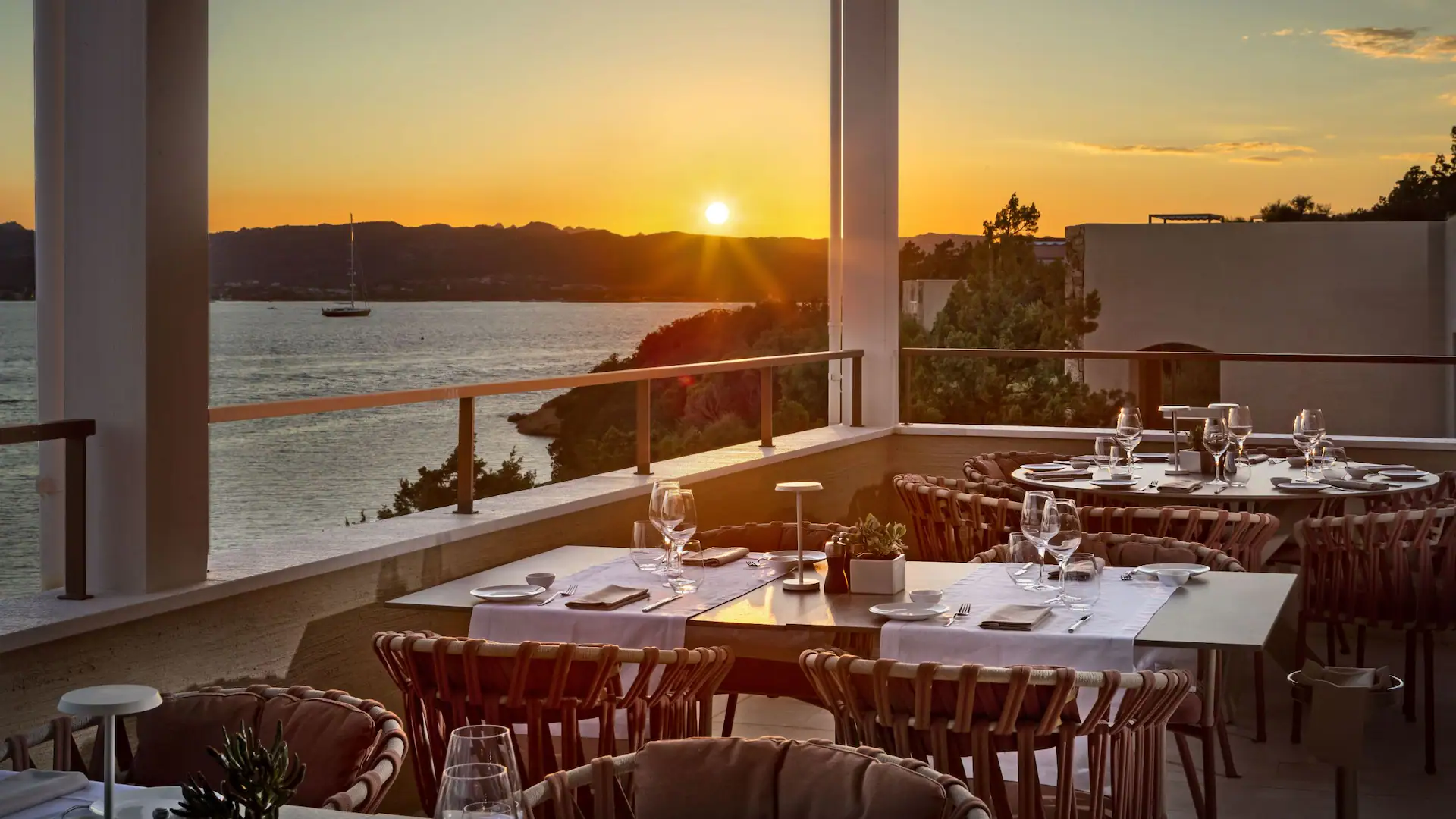
You can get there by sea or by road: 7Pines has its own dock, mooring buoys for yachts up to 30 meters long, and even a helipad. Opened in August 2022, this is the group’s second property after the Ibiza resort that gave it its name. The resort spans 15 hectares of gardens that slope down toward Baja Sardinia, just ten minutes from Porto Cervo and the high-end shops of the Costa Smeralda. Paths fragrant with juniper and rosemary wind through the 75 rooms and suites, divided into three hamlets: the gardens, the lagoon, and the seaside—the latter being the most sought-after, right on the sand. Guests can reach the main beach or one of the four coves before taking a dip in the infinity pool overlooking the La Maddalena archipelago, a designated marine reserve. The dining experience, orchestrated by Pasquale D’Ambrosio, features: Capogiro, a Michelin-starred restaurant with two forks from Gambero Rosso, which serves its dishes on a terrace at sunset, while Franco Pepe—often cited as the world’s best pizzaiolo—curates the menu at Spazio. At aperitif time, head to the Cone Club, feet in the sand, as the DJ cranks up the volume. It’s also one of the island’s premier party venues: the Mediterranean Garden hosts up to 300 guests amid Mediterranean flora, the panoramic terrace frames the sun as it sets behind the islands, and a dedicated events team handles every detail. All these features place the 7Pines Resort Sardinia among the best. Hotels for Weddings in Sardinia, and one of the most sought-after venues in Italy for a wedding with your feet in the sand.
7Pines Resort Sardinia
Li Mucchi Bianchi, 07021 Baja Sardinia (Arzachena)
75 rooms and suites
Official website
Nolinski Venezia: Design in the Former Stock Exchange
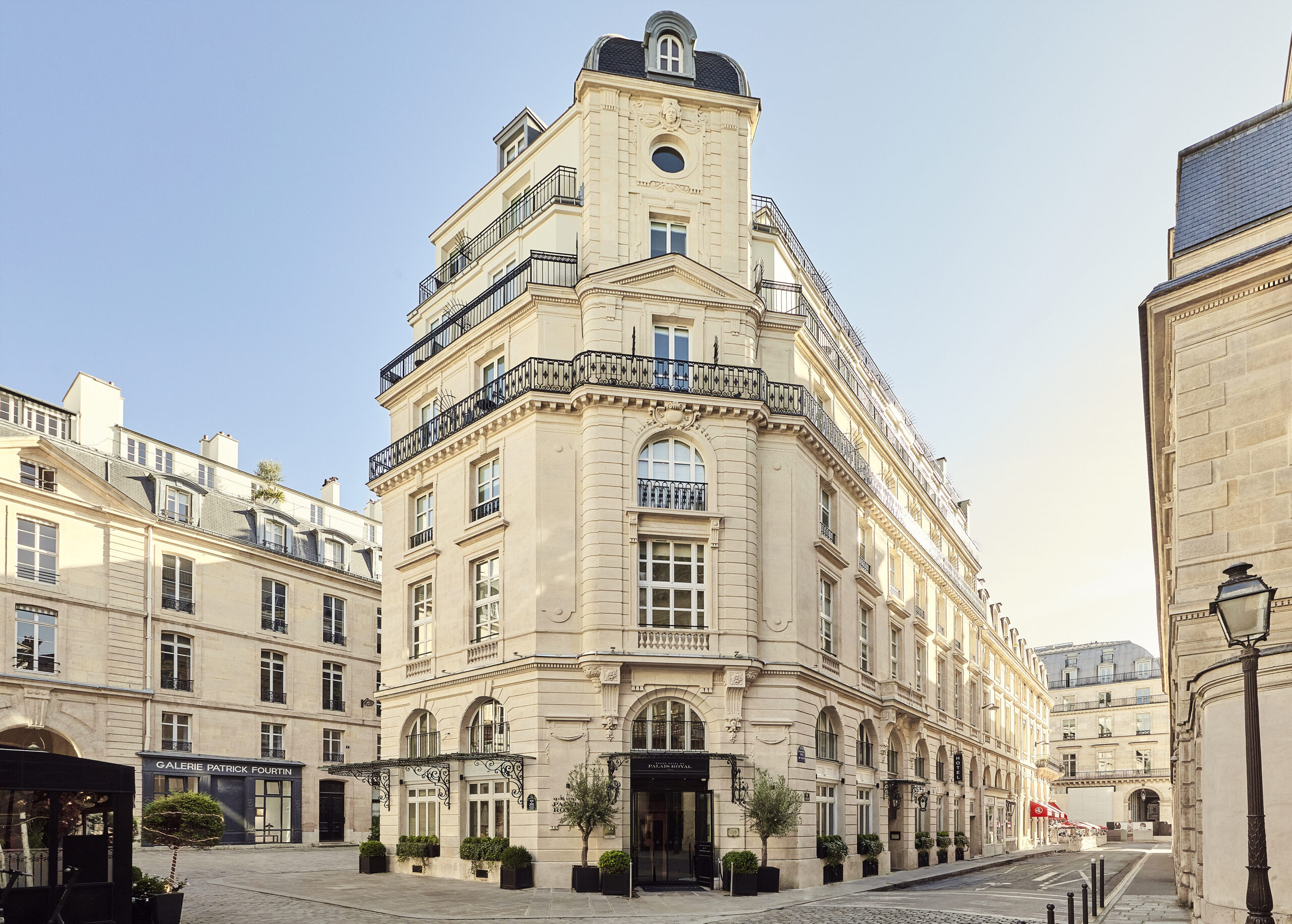
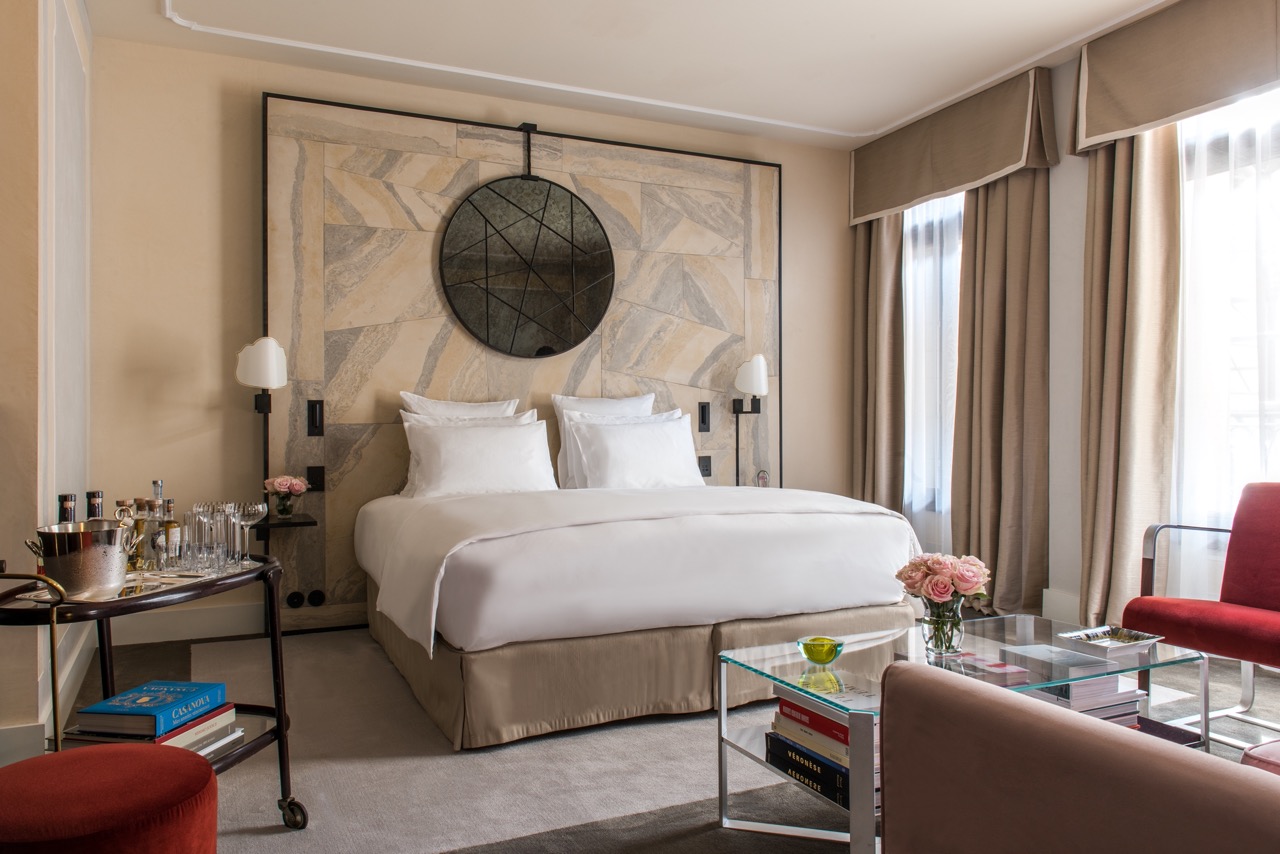
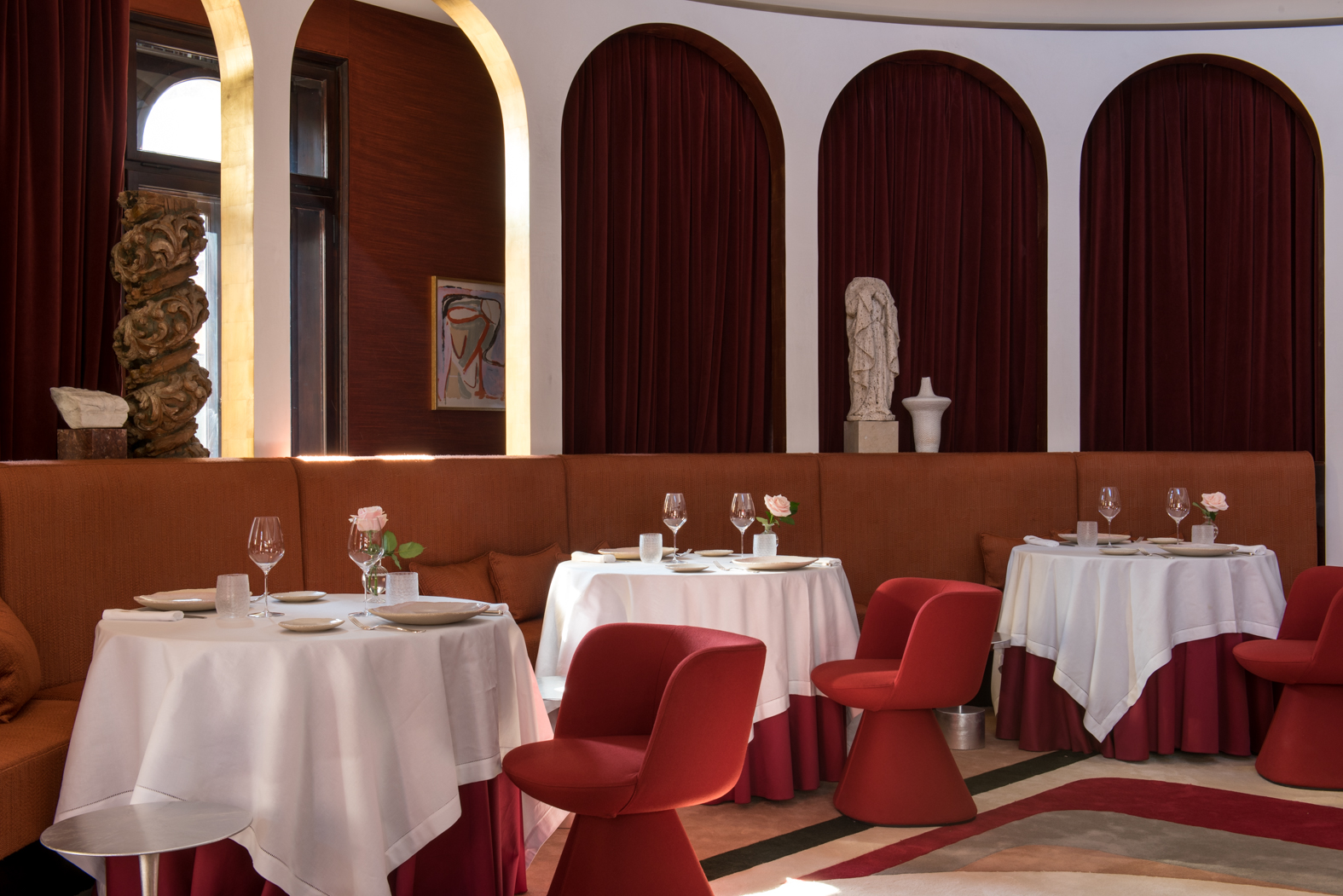
A few canals from St. Mark’s Square, one bridge away from La Fenice, a facade adorned with chimeras—the daughters of Poseidon—marks the site of Venice’s former Stock Exchange. You can get there by motoscafo from the airport: the hotel has its own dock, next to those of the Cipriani and the Gritti. It took four years of construction—with all materials transported by hand via boat—for interior designers Lecoadic & Scotto to blend Art Nouveau, Stile Liberty, and modernism across five floors: marmorino stucco, mango wood paneling, door handles shaped like seahorses, re-crafted by a master Venetian metalworker. Head up to the top floor for the Bassin, a pool lined with gold mosaic whose 360° view takes in the rooftops and, in the distance, the domes of St. Mark’s. We head back down to the Bar Bibliothèque, featuring 4,000 books curated by a bookseller, a fresco by Simon Buret on the ceiling, and a piano; each of the 43 rooms—including 13 suites—houses twenty to thirty of these books, offering a condensed overview of five centuries of Italian history. When it comes to dining, the Palais Royal occupies the former amphitheater of the Stock Exchange, beneath the gaze of a 13th-century capital.ᵉ century: Chef Philip Chronopoulos, a one-Michelin-starred chef, blends French technique with Mediterranean generosity. Between this Michelin-starred restaurant, the golden pool on the rooftops, and an art collection ranging from 16th-century lionsᵉ From the century-old lobby to the Renaissance portraits in the suites, the Nolinski Venezia ranks among the best 5-star hotels in Venice, for those who prefer a stylish spot to yet another palace on the Grand Canal.
Nolinski Venice
Calle Larga XXII Marzo 2032, 30124 Venice
43 rooms, including 13 suites
Official website
Grand Hotel Villa Serbelloni, Bellagio's timeless classic
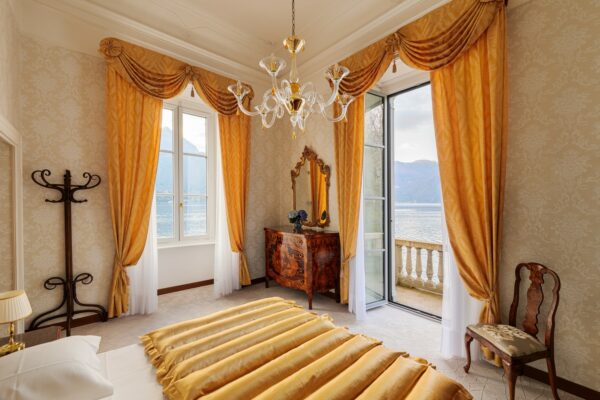
The neoclassical villa that Count Frizzoni had built in the 1850s by architect Rodolfo Vantini, at the very tip of Bellagio—where Lake Como splits into two arms—became the Grand Hotel. Since 1918, the Bucher family has owned it—now in its fourth generation—and has kept it vibrant and relevant today: marble staircases, frescoed ceilings, Murano chandeliers in the Salone Reale, and 94 rooms overlooking the water. Churchill stayed there, as did Kennedy and Clark Gable; the Bellagio in Las Vegas owes its name to this promontory. Yet the hotel has reinvented itself: a major renovation, a beach club with retro charm, and a 1,500 m² spa—one of the largest on the lake. At the table, two voices echo each other. At Le Mistral, a Michelin-starred restaurant since 2005, Chef Ettore Bocchia—a pioneer of molecular cuisine in Italy—and a wine cellar with over 400 selections, named the second-most beautiful hotel wine cellar in the world in 2024; at La Goletta, a simpler, sun-drenched take on Italian cuisine by the pool. Guests dine on the terrace as the sun slips behind the Grigne mountains, with sabayon whipped to order right at the table and Neapolitan-style coffee served right in the guest rooms.
Grand Hotel Villa Serbelloni
1 Via Roma, Bellagio (Como)
94 rooms
Official website
La Fiermontina, the olive grove, and the sculptures, in Lecce
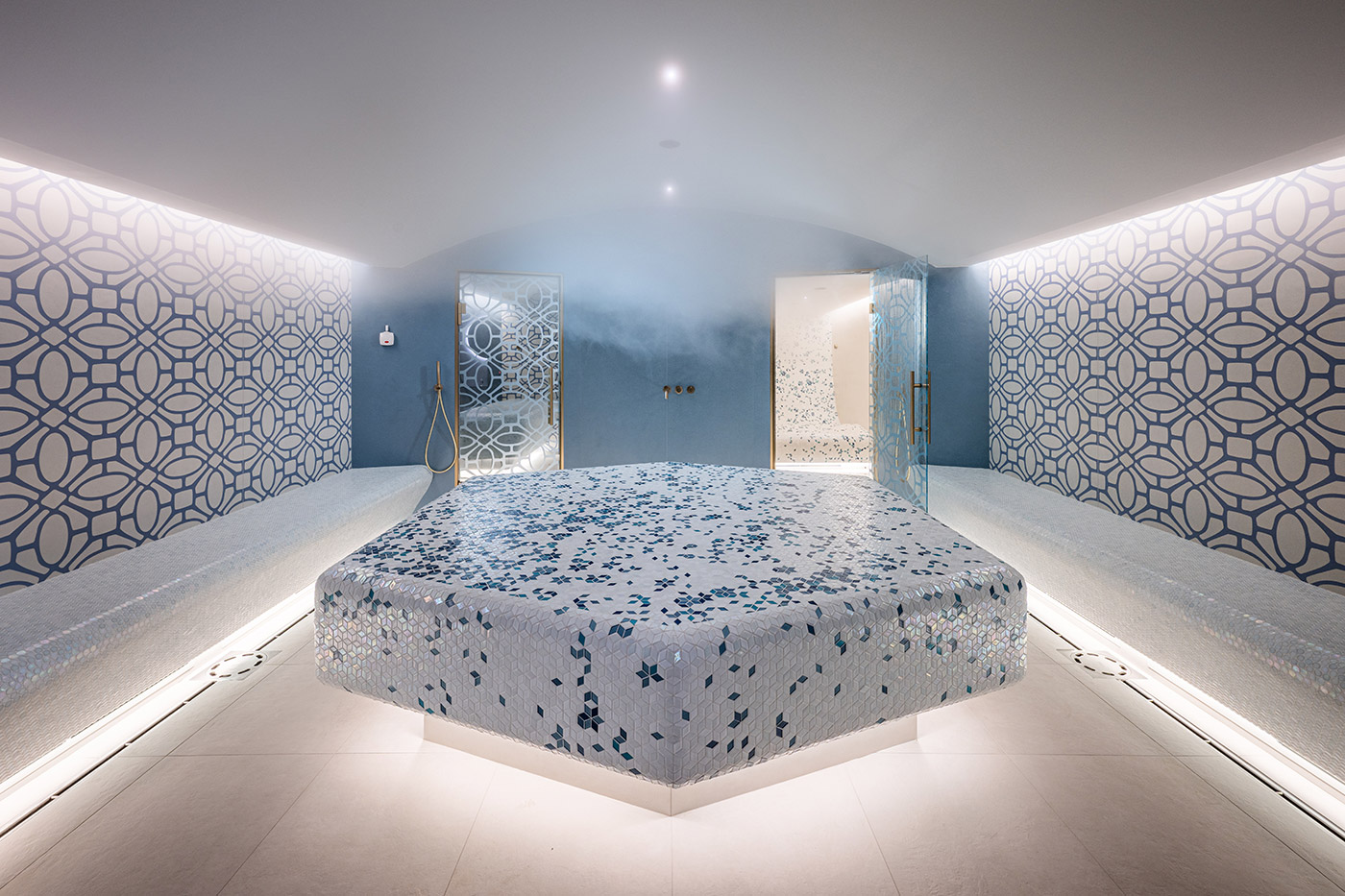
400-year-old olive trees, 16th-century wallsᵉ Century-old sculptures nestled in the grass: right in the heart of Lecce, behind Baroque facades, La Fiermontina hides an olive grove, a 17th-century masseriaᵉ century, set within the city walls. The house tells a story of family and art. It bears the name of Antonia Fiermonte, an artist born in Puglia in 1914 who died at age 42, whom her grandchildren, the Filali family, wished to honor. Her story is told in the garden: she loved the sculptor René Letourneur, then Jacques Zwobada, René’s best friend, and the works of both men now stand watch among the olive trees—Letourneur’s ’Harmonie II,« Zwobada’s »Le couple,« near a bronze by Fernand Léger, »Les deux sœurs.« Opened in 2015, the property features 16 rooms and three suites with honey-colored star-vaulted ceilings, furnished with pieces by Le Corbusier, Charlotte Perriand, and Tobia Scarpa. Dinner is served at Le Zéphyr, featuring a modern take on Salento cuisine, around Zwobada’s »Liberté,« carved from marble; guests read in the shade of the orange trees, near the pool bordered by the walls. Fifty meters away, the Fiermonte Museum extends the collection. It’s the kind of place where, over breakfast, you eventually find yourself asking about the story behind each sculpture.
La Fiermontina Luxury Home
Piazzetta Scipione de Summa 4, 73100 Lecce
16 rooms and three suites
Official website
Pieve Aldina, the Tuscan village in Chianti
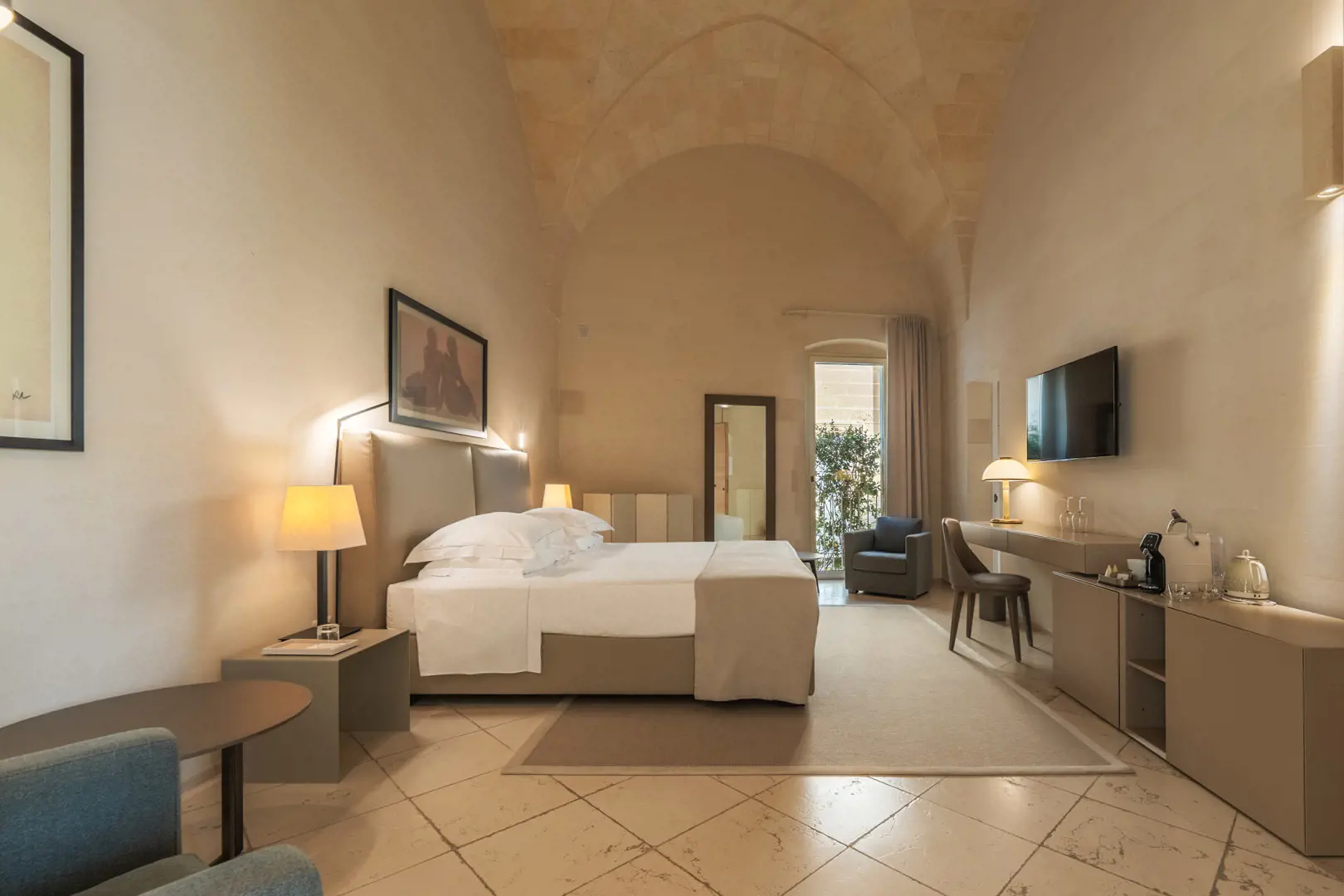
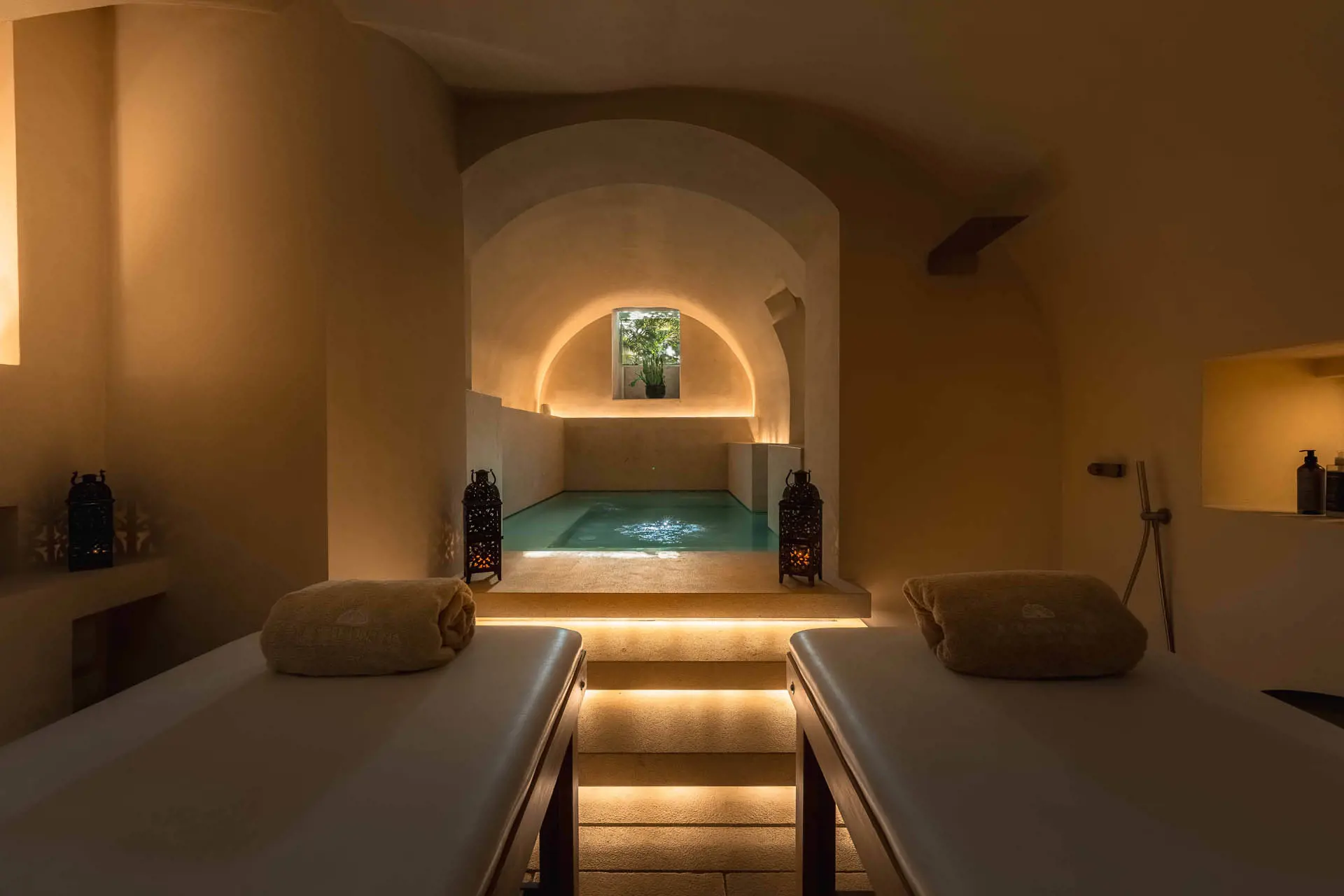
One pieve, in Tuscany, is the country church around which the hamlet once clustered. It stands in Radda in Chianti, on the Chiantigiana—the wine route connecting Florence to Siena—and dates back to the 12thᵉ century. Its name comes from a gift: in 1043, the Count of Piancaldoli gave this estate to his wife, Aldina Ubaldini. The Florentine firm Pierattelli restored the three buildings—the Abbazia, which adjoins the historic church; the Casa del Fattore; and the Limonaia—to create 22 guest rooms, while preserving the neoclassical frescoes on the piano nobile. You walk on Impruneta cotto tiles, handcrafted from galestro clay and fired for 72 hours in a wood-fired kiln; their reddish hue extends the color of the hills into the guest rooms. You spend your evenings without television—by choice—simply listening to the silence. At the restaurant Le Rondini, Florentine chef Niccolò Pini reinterprets the Tuscany of yesteryear: panzanella, hand-pulled pici, and Chianina Fiorentina, served with local Chianti Classico wines. And we set out to explore the vineyards in a different way: the picnic basket from this Tuscan hotel On your lap, on a Vespa, or in a convertible, through 40 hectares of olive groves and rows of Sangiovese vines, with a tasting stop at a winemaker’s as the day’s only requirement.
Pieve Aldina
Traversa del Chianti, 53017 Radda in Chianti
22 rooms and suites
Official website
Reschio, the Bolza family's Umbrian castle
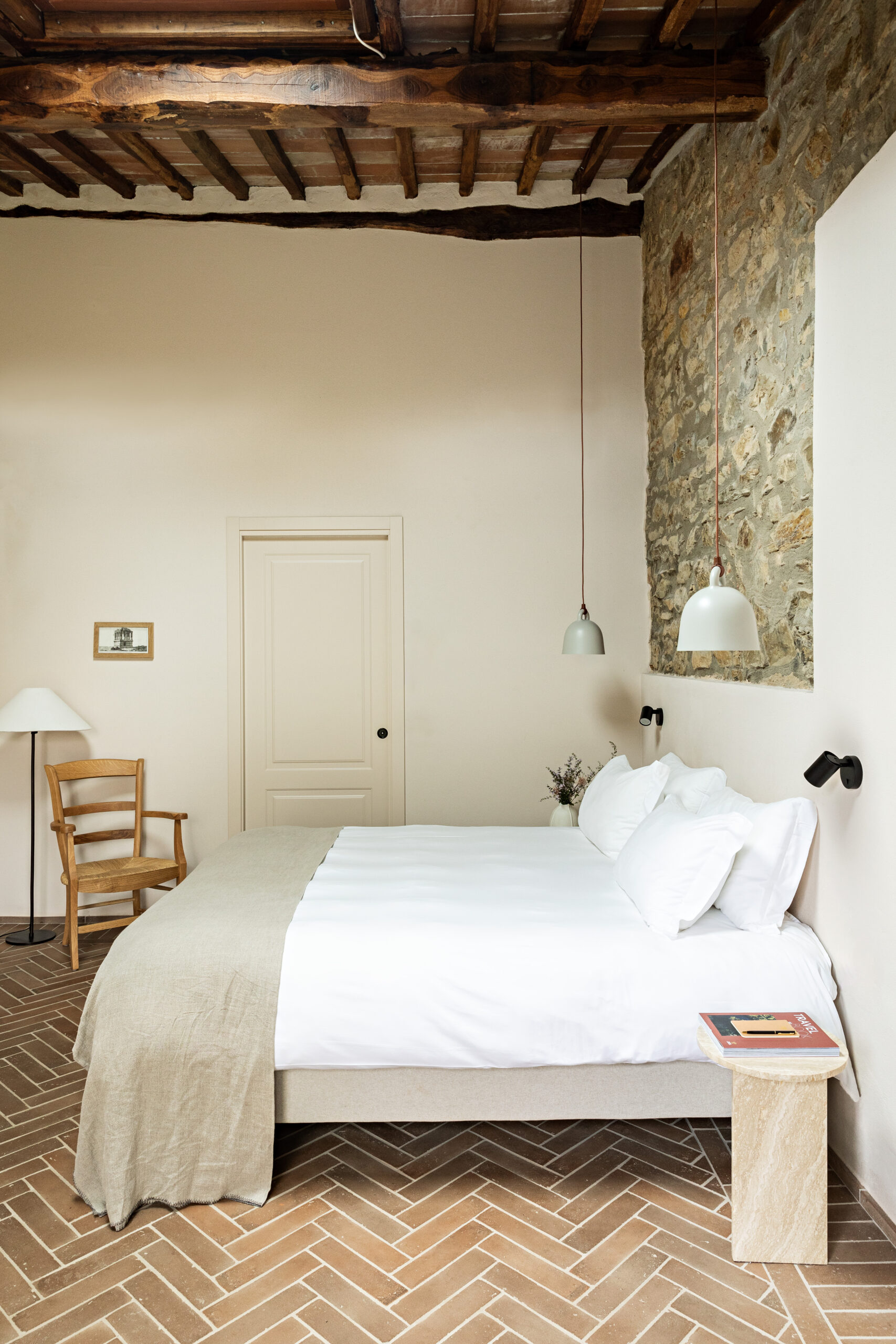
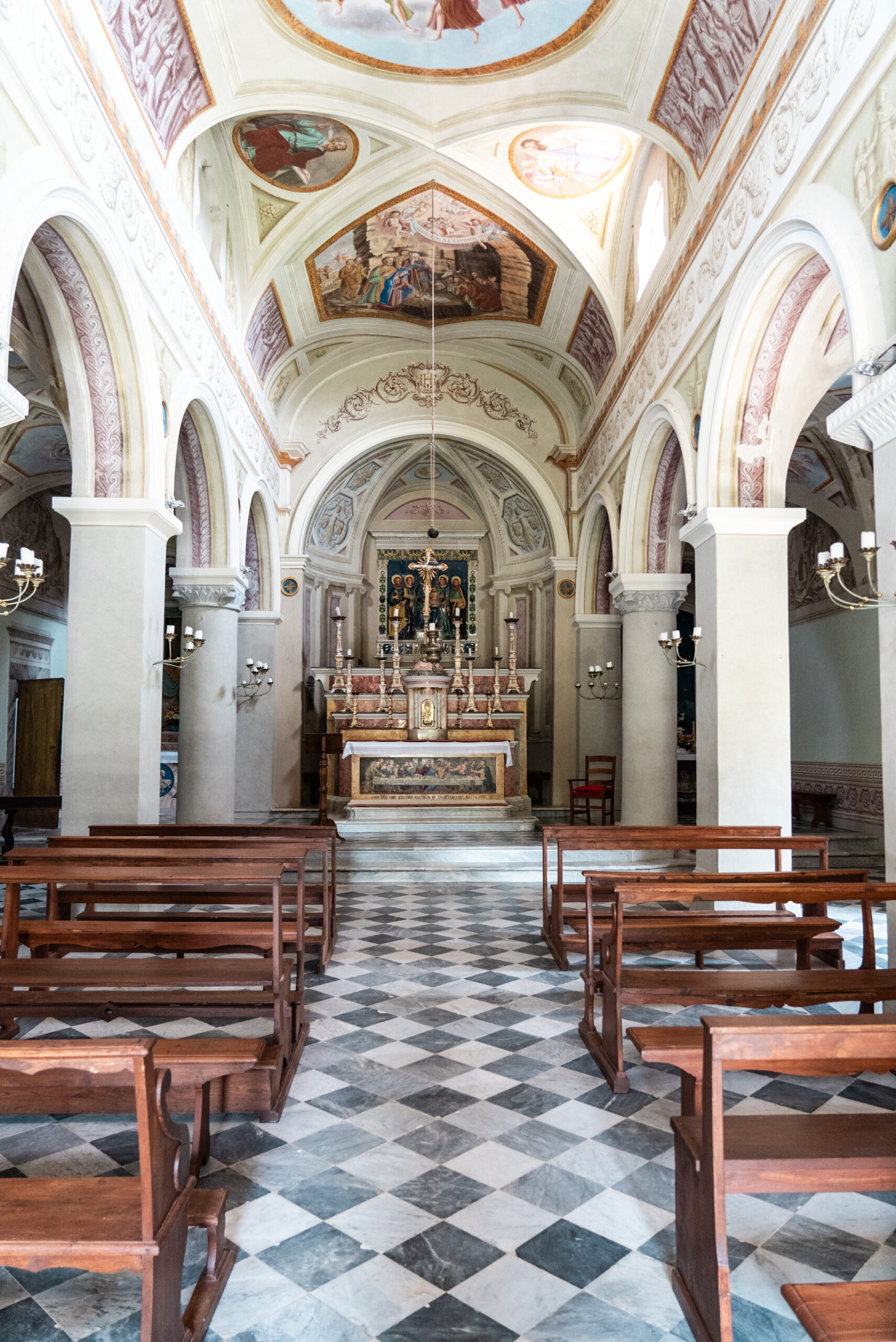
Built in 1050 on the ridge separating Umbria from Tuscany, the Castello di Reschio has watched over its 1,500 hectares long before Count Antonio Bolza purchased the estate in 1994. His son Benedikt, an architect, spent years working on the property: first the ruined farmhouses, transformed one by one into homes, then the fortress itself, which reopened as a hotel in the spring of 2021. The 36 rooms bear his mark in the literal sense: the furniture, beds, and light fixtures come from the Tabaccaia, the former tobacco drying shed that has been converted into a workshop where the artisans of B.B. for Reschio work. On the walls hang vintage portraits of unknown ancestors that you find yourself staring at a little too long, searching for a family resemblance. The vaulted cellar has been transformed into a bathhouse featuring a Roman bath, a hammam, and a sauna carved from stone; beneath the glass roof of the Palm Court, amid cast-iron columns and palm trees, a grand piano begins to play as evening falls—the hour for a Negroni. Two restaurants share the evenings: alle Scuderie, in the former stables, and al Castello, the high-table restaurant overlooking the valley, both supplied by the estate’s vegetable garden and vineyards. In the early morning, you set off on horseback—riding an Andalusian—into the low-hanging light of the hills.
Reschio
Tabaccaia di Reschio, 06060 Lisciano Niccone (Perugia)
36 rooms and suites
Official website
Casa Monti, the rooftop in the Rione Monti neighborhood
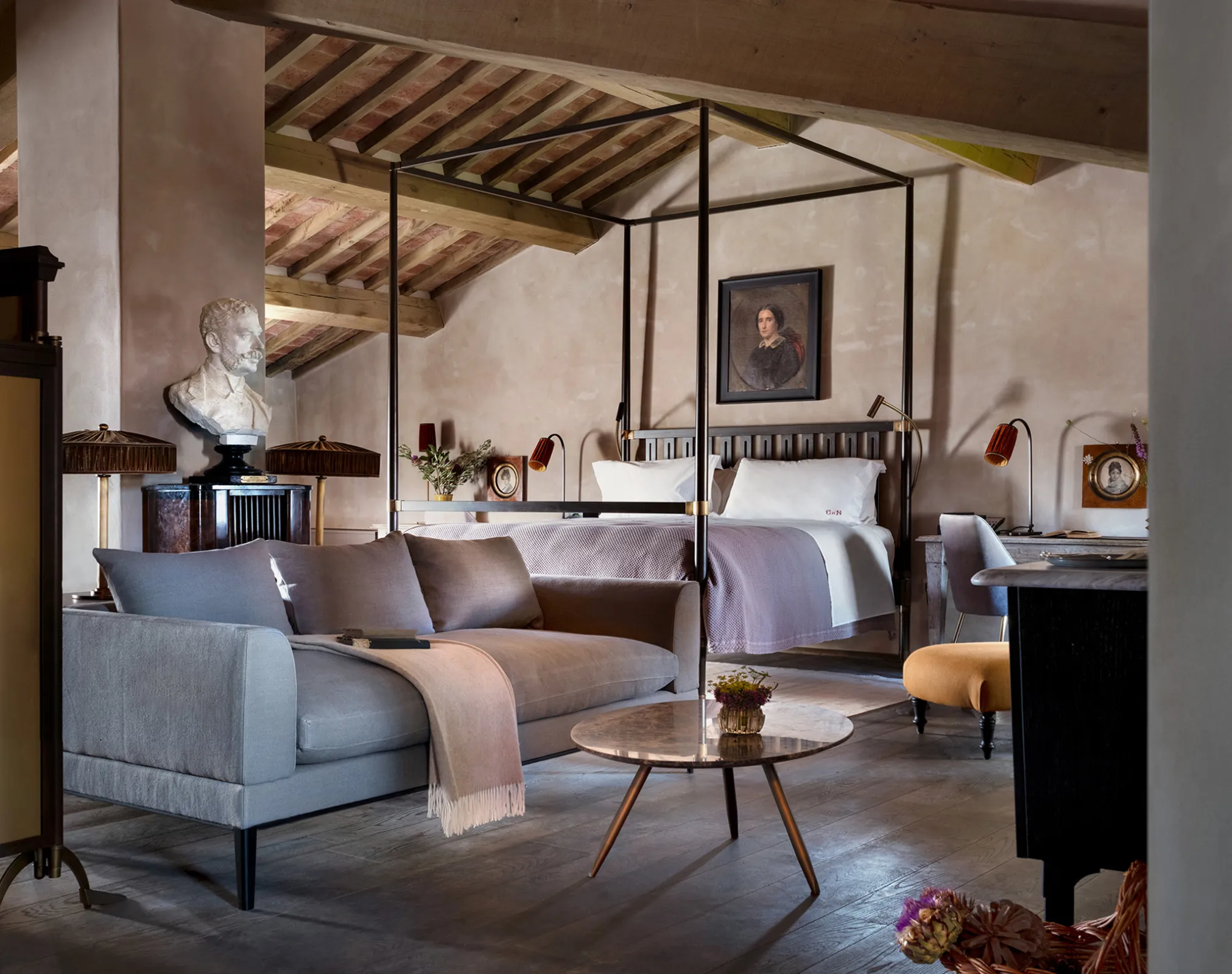
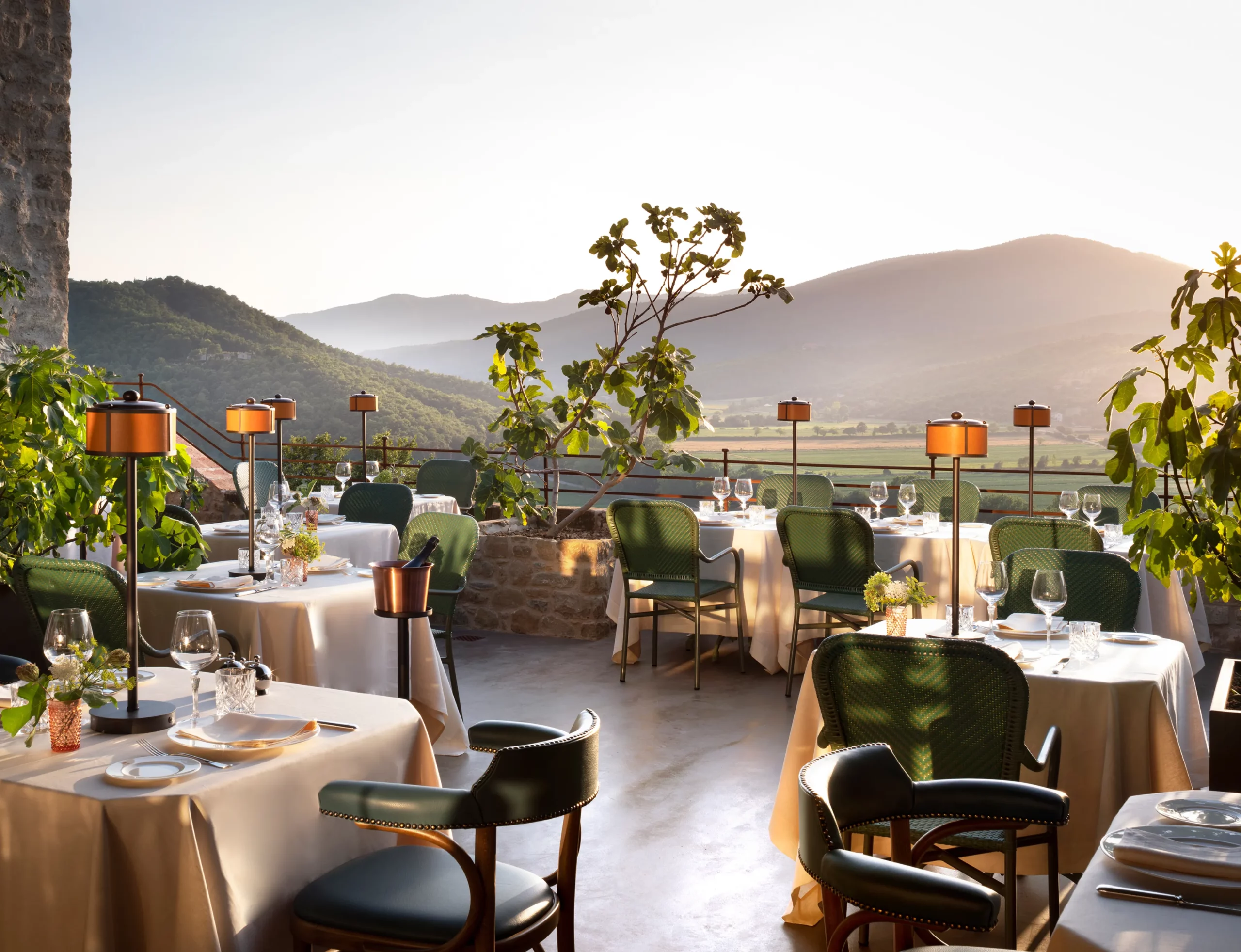
We climb the six floors of a palazzo with an 18th-century façadeᵉ century, once owned by the Roman nobility, leading out onto the rooftop: the rooftop pays homage to the starlings that circle above Rome at dusk, and bird sculptures perch among the tables, facing the umbrella pines. We’re in the city’s first rione, Monti, between the Forum and the Colosseum—a neighborhood of artisans, galleries, and wine bars that Romans are happy to keep to themselves. The family-owned Leitmotiv group, which also runs La Fantaisie in Paris, enlisted the help of interior designer Laura Gonzalez: 26 rooms and ten bohemian suites, featuring bold colors and fine materials, with no two rooms exactly alike. On the ground floor, order a maritozzo and an espresso at the patio counter, near the fountain; in the evening, the restaurant’s menu on Via Cimarra features unpretentious Roman cuisine, such as tonnarelli cacio e pepe and a reimagined parmigiana. Two floors up, under the open sky, the Susanne Kaufmann spa at this 5-star hotel in Rome, bathed in golden light. Then we head back up, a Negroni in hand, to watch the city light up from the rooftops.
Casa Monti
210 Via Panisperna, 00184 Rome
26 rooms and ten suites
Official website
Portrait of Milan: The Seminar Returns to the City
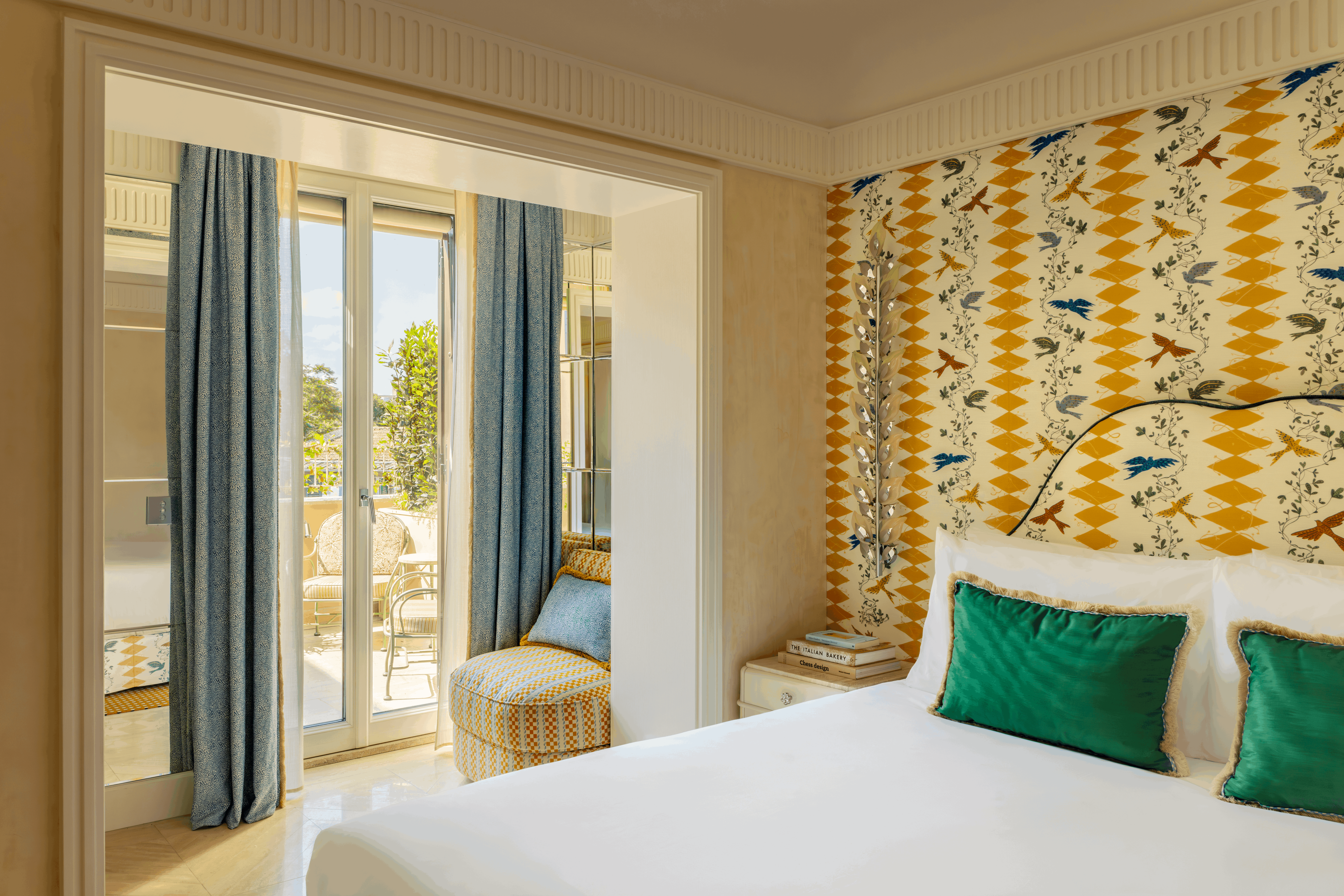
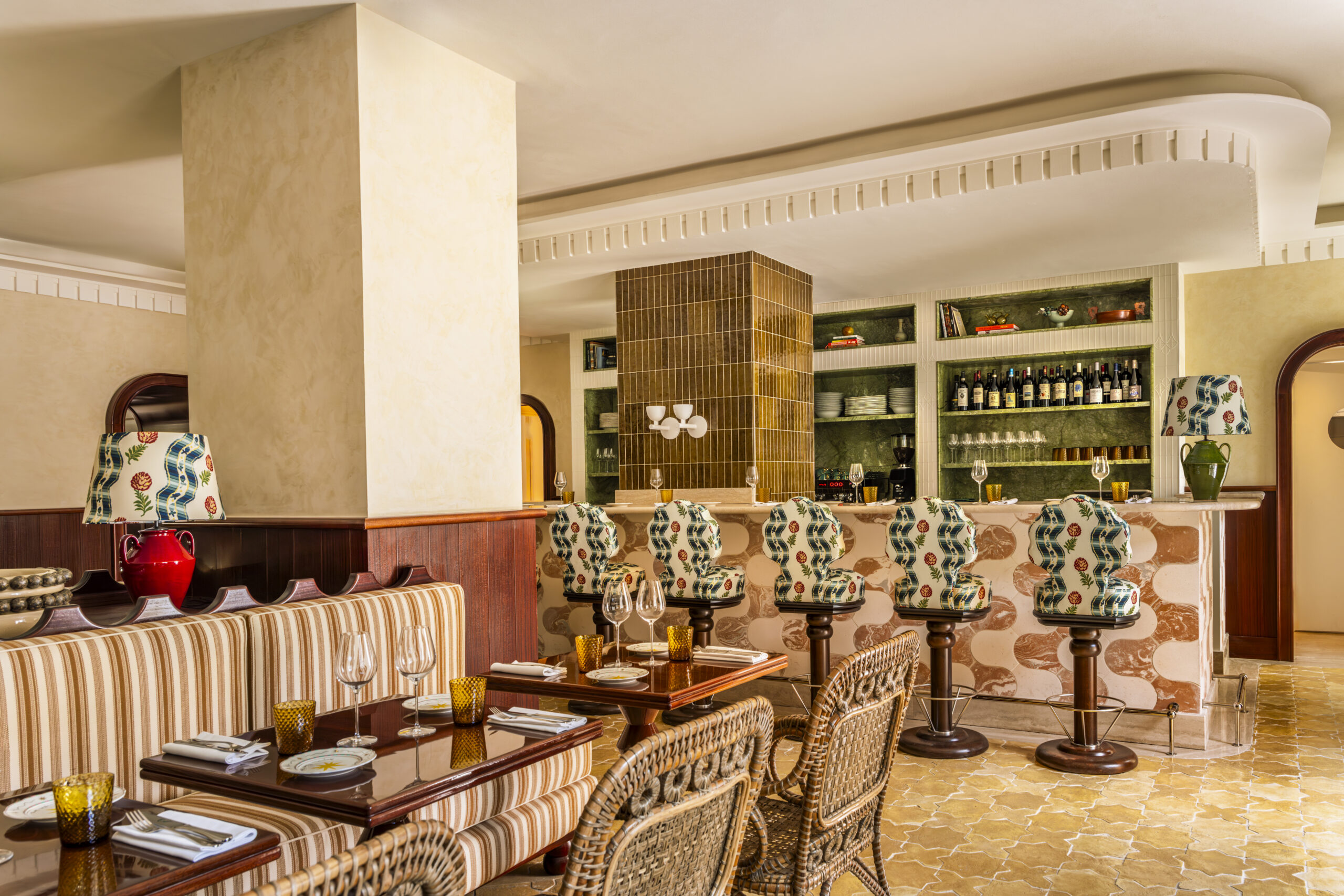
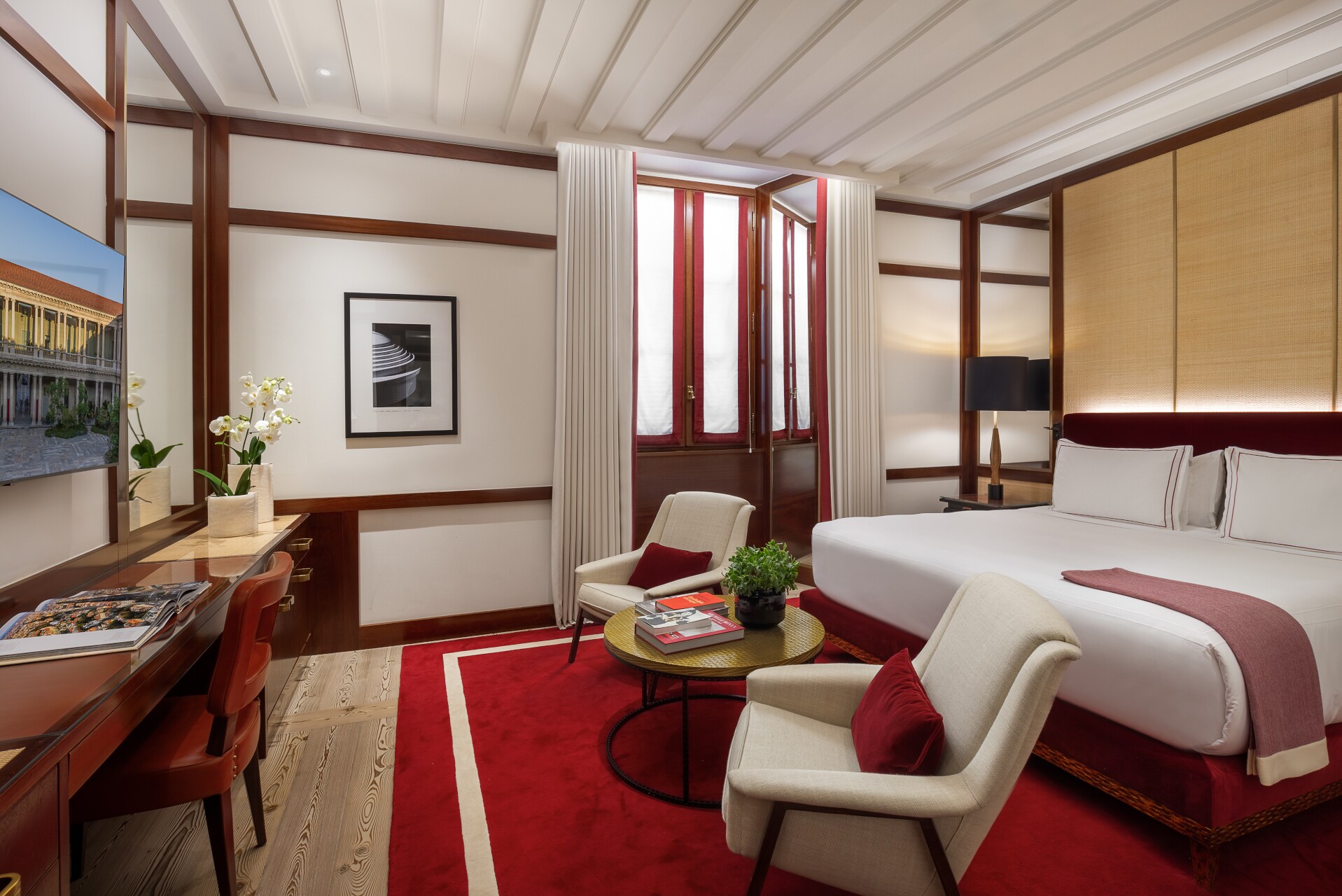
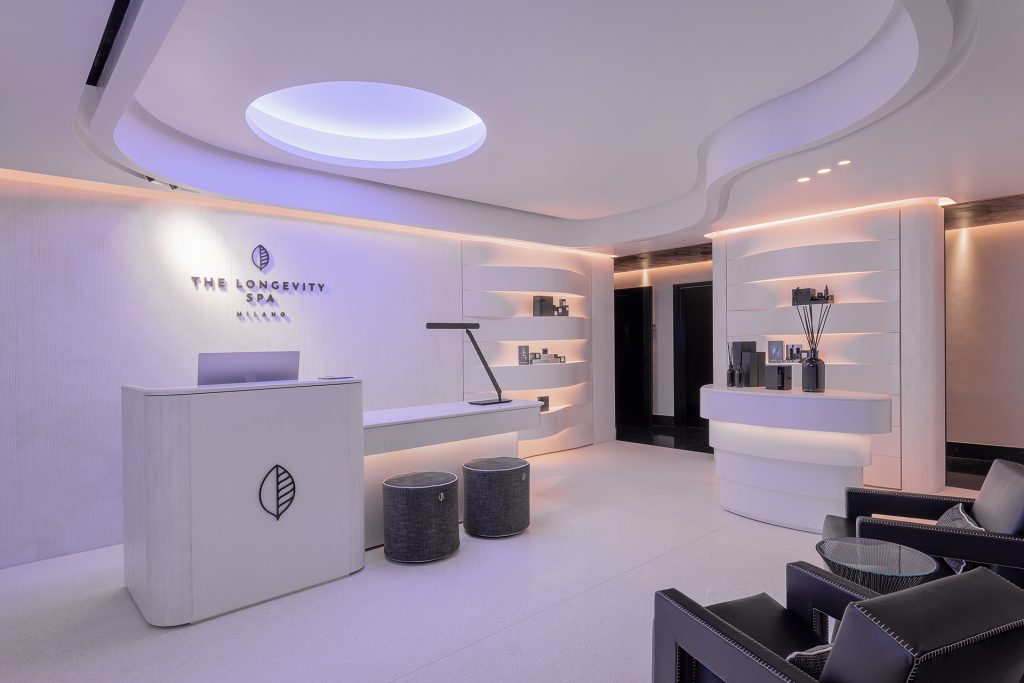
A Baroque gateway by Francesco Maria Richini, a double loggia with paired columns, a cobblestone square that the Milanese had lost sight of for some twenty years: behind Corso Venezia, Piazza del Quadrilatero has reappeared. It took ten years of negotiations with the archdiocese for the Lungarno Collection, the Ferragamo family’s hotel company, could reopen the former Archiepiscopal Seminary—one of the oldest in Europe, built in 1564 by Saint Charles Borromeo, with his motto “Humilitas” still visible on the walls—to the city. Architects Michele De Lucchi and Michele Bönan have created, within this stone edifice, 73 rooms on the seminary’s upper floors, featuring rattan and reimagined Ferragamo trunks. You cross the piazza, now filled with terraces and shops, pass by 10_11 and the Beefbar, and finally descend beneath the cobblestones: the former vaulted storage rooms, with their granite columns and low ceilings, house a Longevity Spa that promises to banish jet lag with cryotherapy. It’s one of the few hotels that has given a public space back to the city at the same time it opened its doors—and where, in the morning, under the colonnade, the aroma of coffee and pastries from the neighborhood bakeries wafts through the air. People stay there, but they also stop by—just like the Milanese—simply to enjoy the beauty of the place.
Portrait of Milan
11 Corso Venezia, 20121 Milan
73 rooms
Official website
San Domenico Palace, the "hanging convent" of Taormina
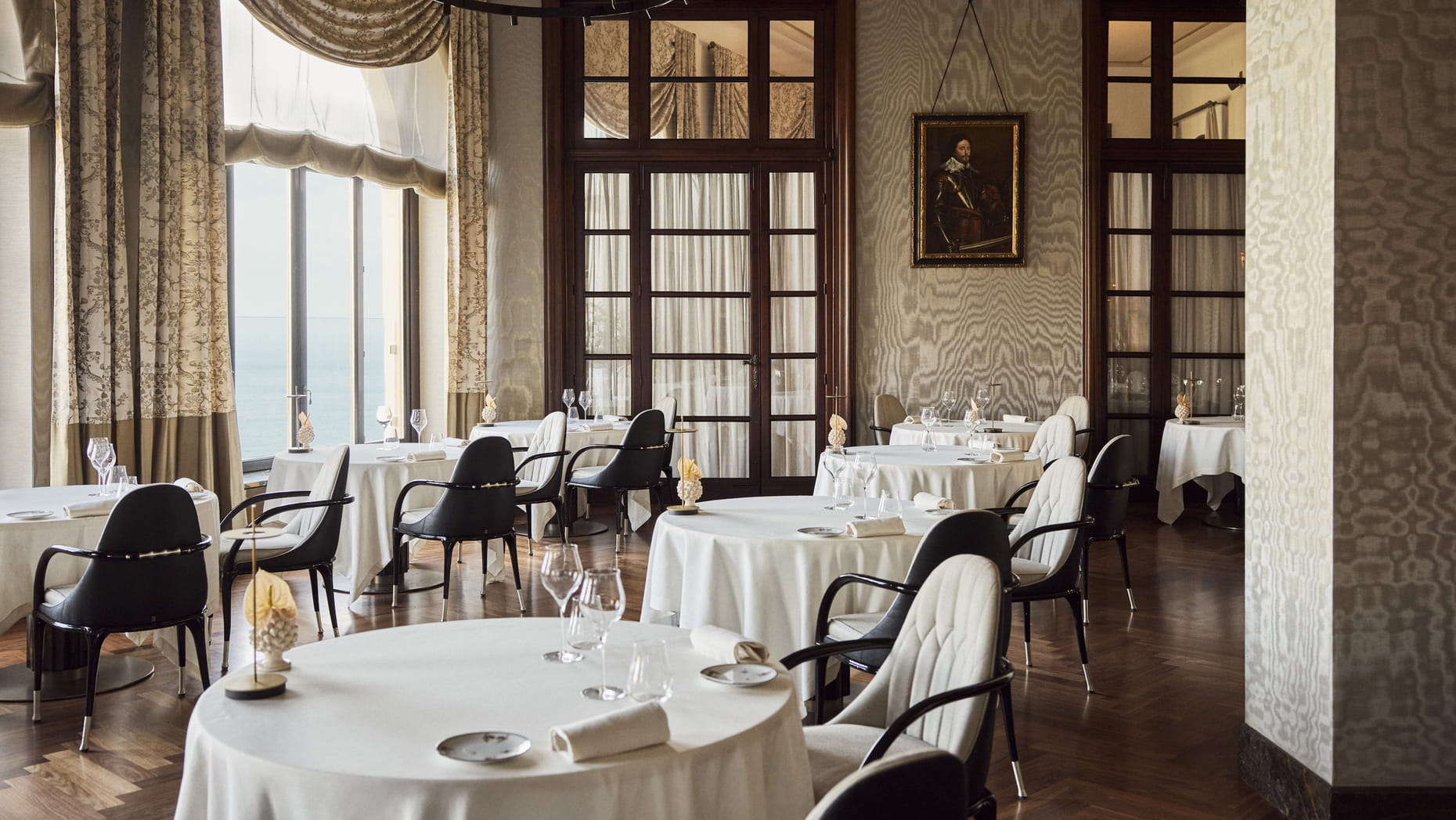
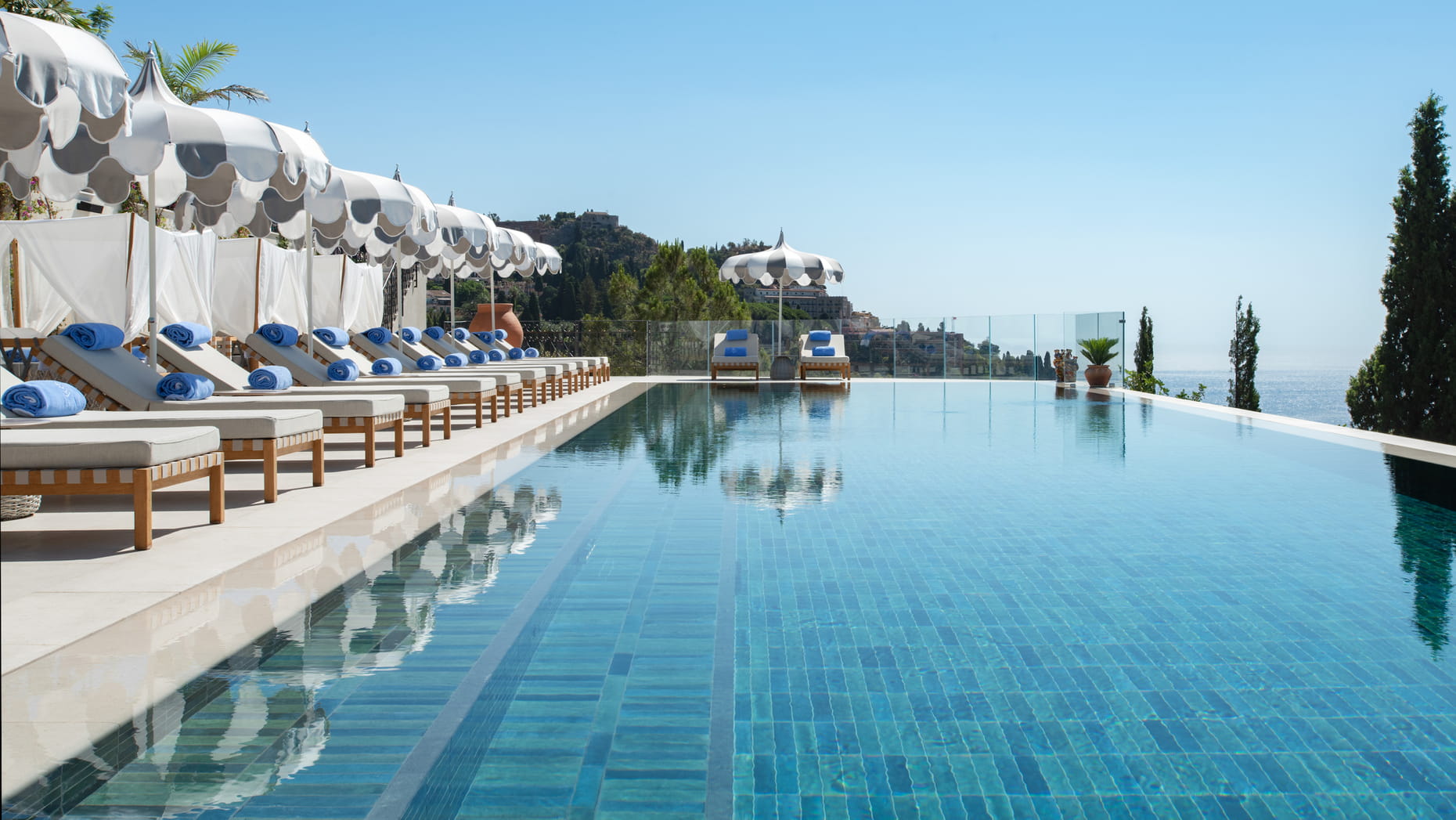
On a rocky promontory overlooking the Ionian Sea, facing Mount Etna and the Greek theater in Taormina, a 14th-century Dominican conventᵉ The centuries-old building has stood for six centuries. You enter through a cloister, walking past frescoes and other works that remain from the monastery: Four Seasons, which reopened the hotel in 2021, opted for understated elegance over flashy displays, relying primarily on Sicilian artisans. Some of the 111 rooms occupy the monks’ former cells, while others are in the Grand Hotel wing added in 1896, when Prince Domenico Rosso di Cerami transformed the convent into a luxury hotel. Oscar Wilde and Audrey Hepburn have stayed there; more recently, the second season of *The White Lotus* set up its cameras there, and the entire island saw an influx of curious visitors. You can swim in the 21-meter-long infinity pool, which seems to flow into the bay, or stroll out to the gardens where the jasmine fills the air with its fragrance. At dinner, head to Principe Cerami, a Michelin-starred restaurant, where Massimo Mantarro—born on the slopes of Mount Etna—takes you on a culinary journey through Sicily, from the sea to the volcano, with eggplant and citrus as the common threads. In the morning, we enjoy breakfast on the terrace, a granita in hand, with the ancient theater below and the volcano as a backdrop: few hotels in the world offer such a panoramic view.
San Domenico Palace, a Four Seasons Hotel
5 Piazza San Domenico, 98039 Taormina
111 rooms and suites
Official website
The Sirenuse, Positano’s family-friendly icon
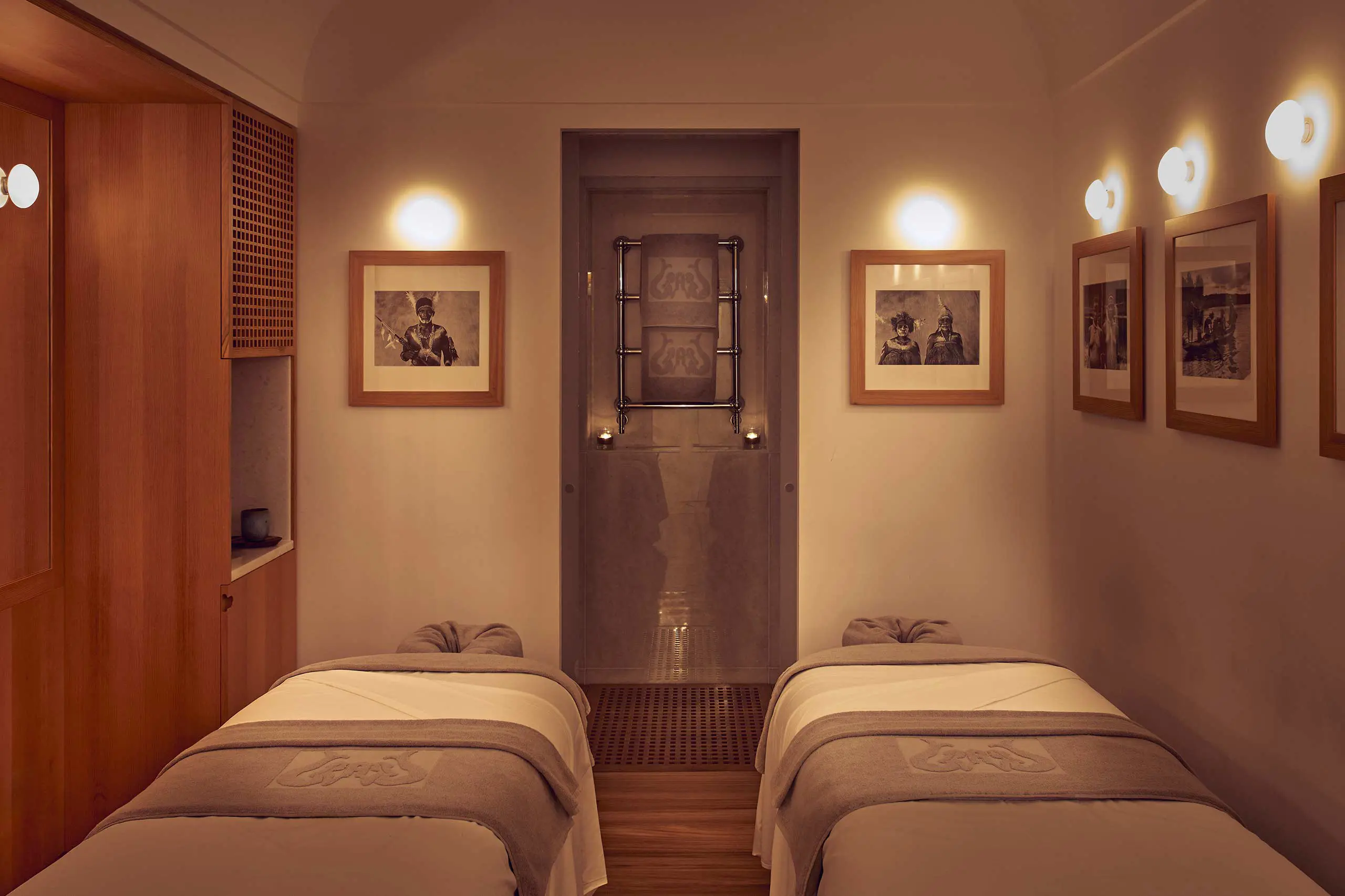
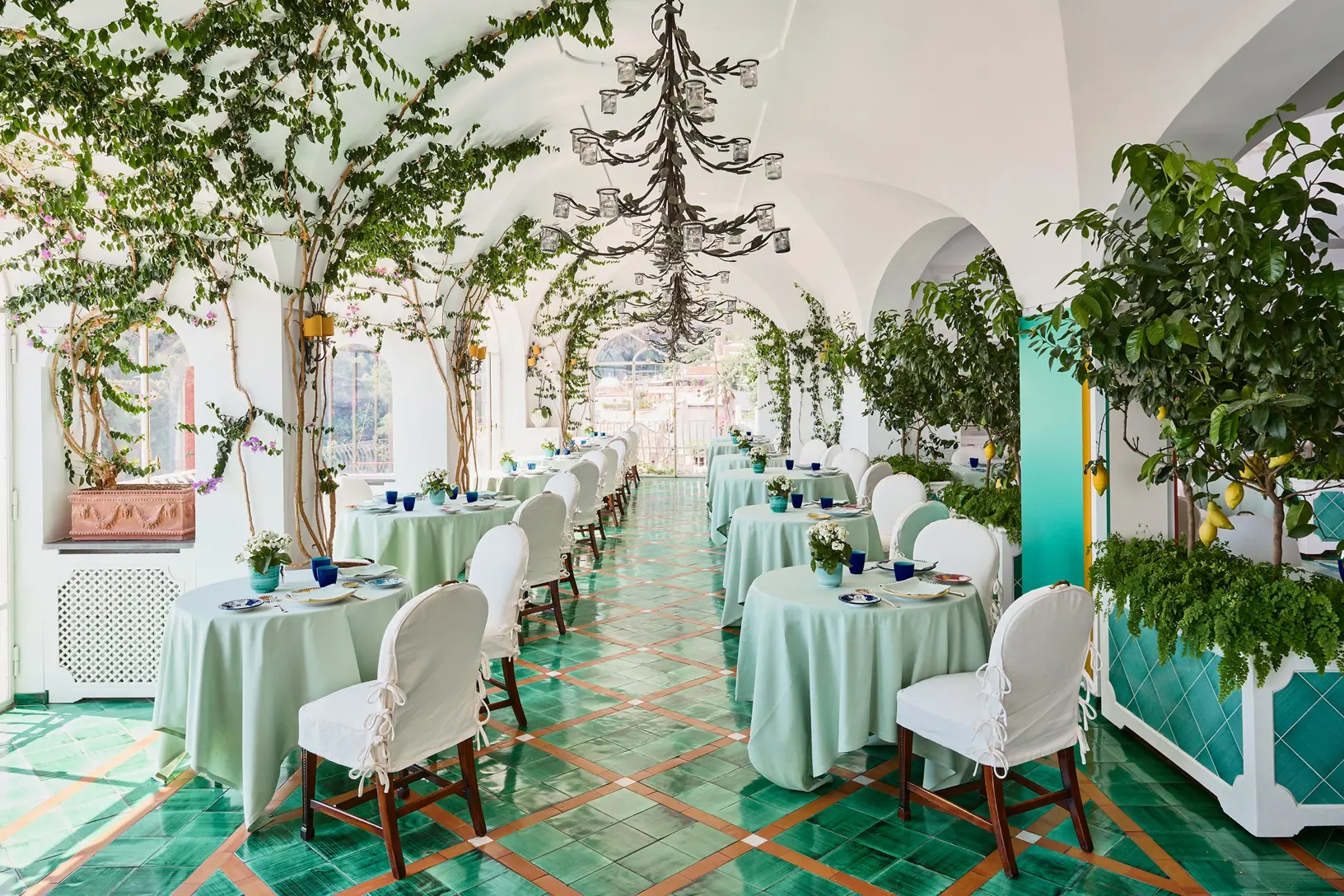
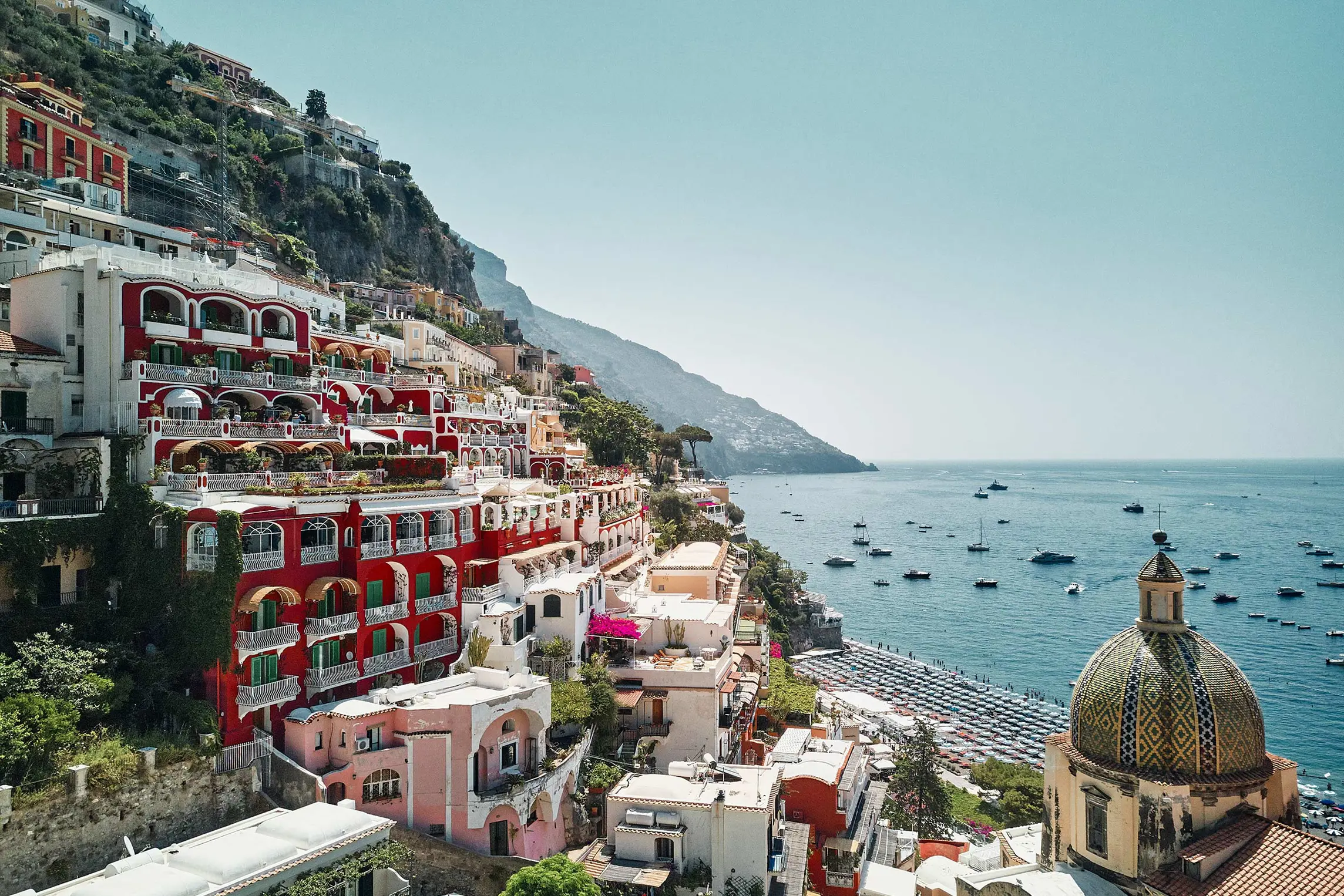
400 candles lit one by one each evening on the terrace of La Sponda: it takes an hour to light them, and almost as long to extinguish them. It is there, at his Michelin-starred table, that Chef Gennaro Russo showcases the flavors of Campania—a risotto with lemon and capers, a babà with Neapolitan lightness. The Sirenuse has been a fixture in Positano since 1951, when four members of the Sersale family decided to open their summer home—overlooking the bay—to travelers. The family is still there—now in its fourth generation—and has expanded it to 58 rooms tiled with majolica, furnished with antique pieces selected one by one, while preserving its feel as a private residence. «Positano takes you,» Steinbeck wrote in 1953: the phrase still rings true when you lean on the terrace amid the bougainvilleas, with the Galli archipelago offshore and the houses cascading down the cliff. Since 2015, artists have been invited each year to engage with the space: in 2024, Nicolas Party redesigned the pool’s mosaic. The spa was designed by Gae Aulenti; at Aldo’s Bar, suspended above the water, they serve the first spritz of the evening—the kind you’d enjoy at home if you were lucky enough to live in Positano.
The Sirenuse
30 Via Cristoforo Colombo, 84017 Positano
58 rooms
Official website