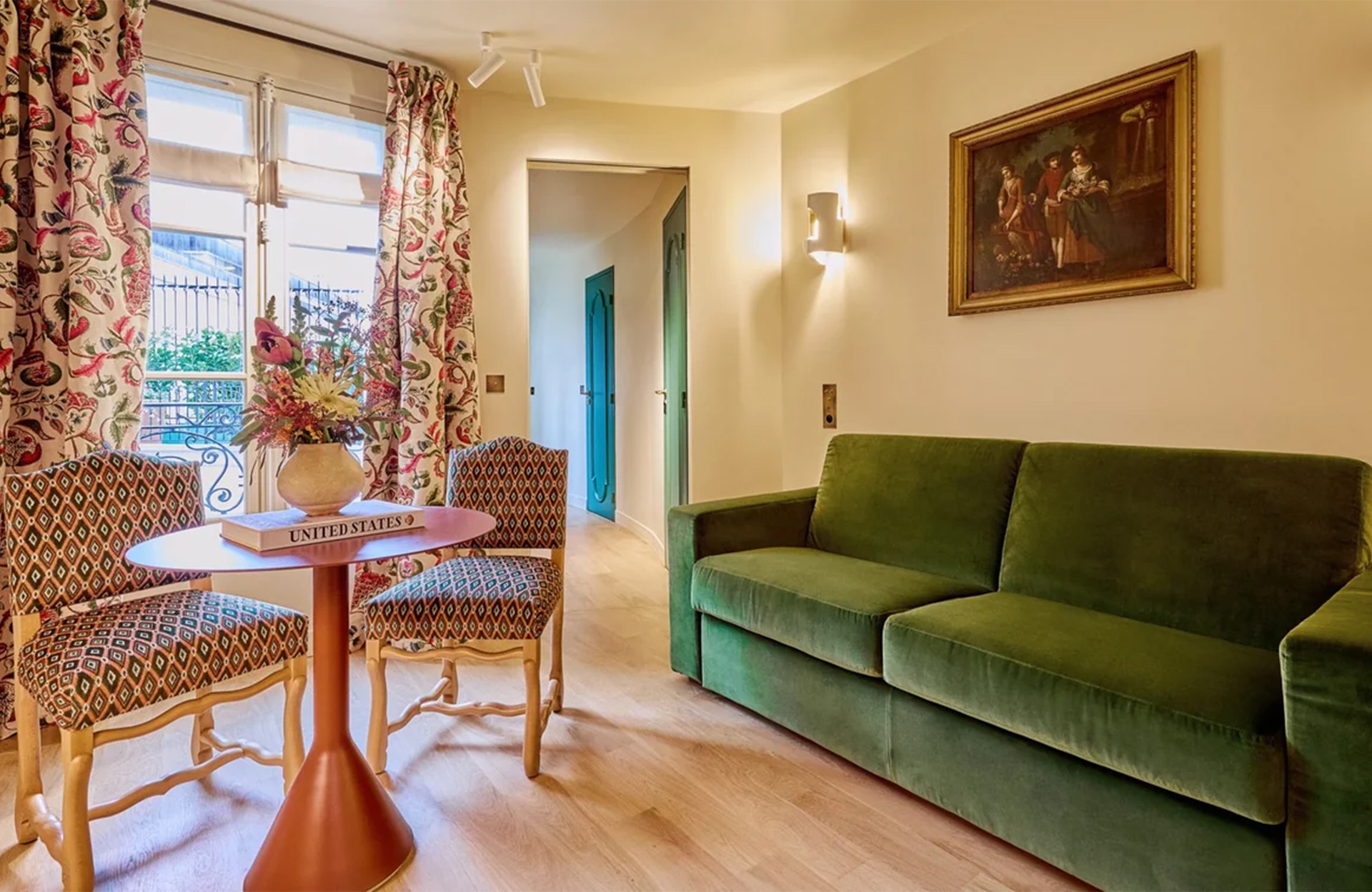
For years, traveling to luxury hotels in the Caribbean There was something strangely predictable about Mexican resorts. Huge resorts. Beige marble lobbies. Infinity pools modeled after other infinity pools. Even when the service was excellent, many hotels began to feel interchangeable once the novelty of the turquoise water wore off.
But that is changing today—quietly, but very clearly.
A new generation of hotels along the Riviera Maya and the Mexican Caribbean coast seems far more focused on atmosphere than on size. Architects talk more about mangroves than about the number of rooms. Designers deliberately leave some walls unfinished. Some properties almost downplay the beach itself, because the focus has shifted to space, textures, privacy, and that very particular form of understated luxury that travelers suddenly seem to be seeking.
Not so long ago, many people planning this kind of trip would spend part of the journey comparing the privacy policies of public Wi-Fi networks or downloading the Best VPN for iPhone before connecting from airports or hotel lounges abroad. More broadly, travel habits are changing: people are now looking for a seamless experience, rather than just luxury in the traditional sense.
And the hotels currently opening in the Mexican Caribbean reflect this new mindset almost perfectly.
When Architecture Finally Stopped Fighting Against the Landscape
The most interesting thing about many of the new luxury hotels on the Riviera Maya is that they no longer seek to dominate their surroundings. Ten years ago, the visual language was one of excess. Gigantic entrances. Spectacular fountains. Buildings desperately trying to impress.
The new generation seems calmer. More reserved.
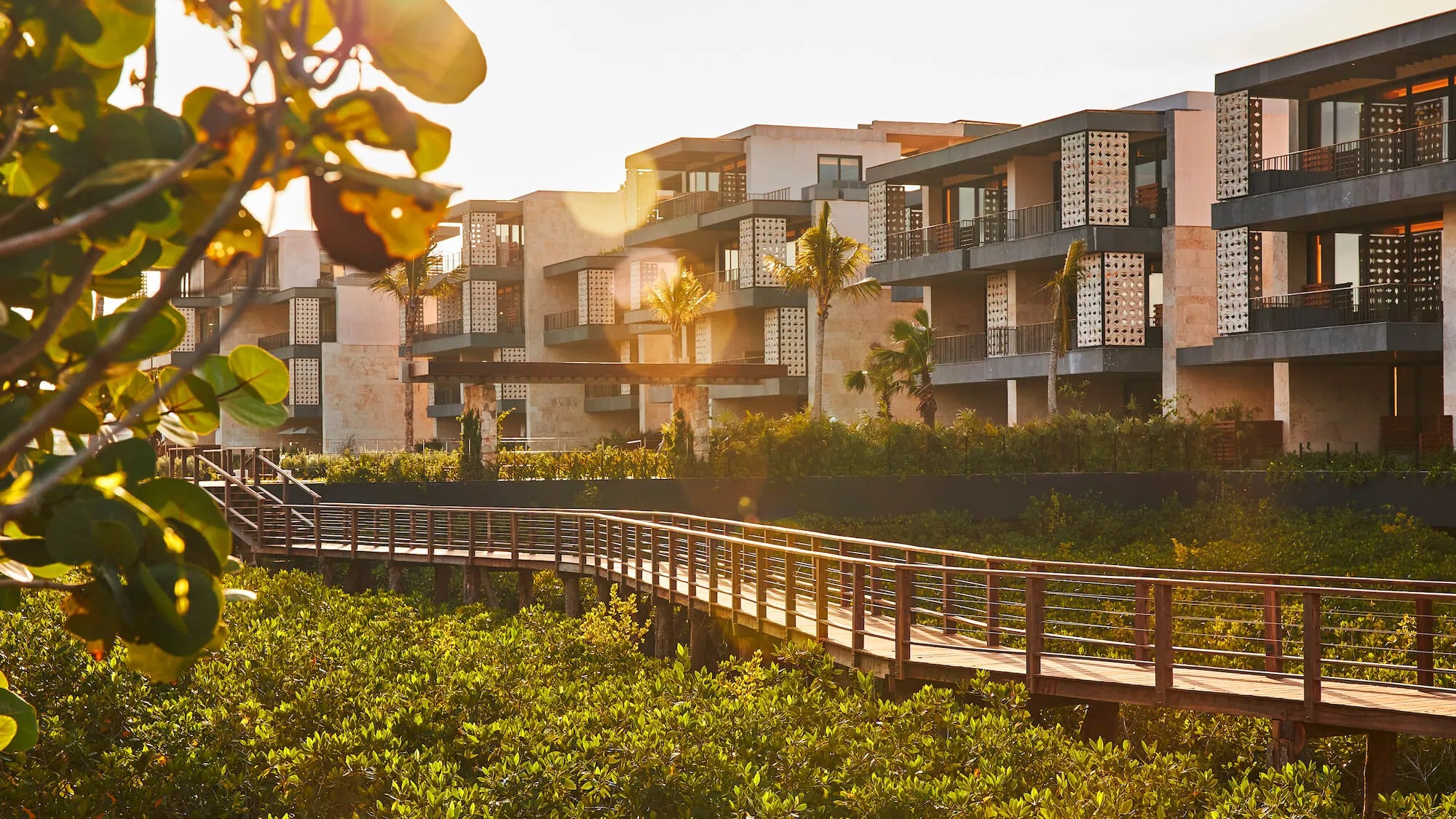
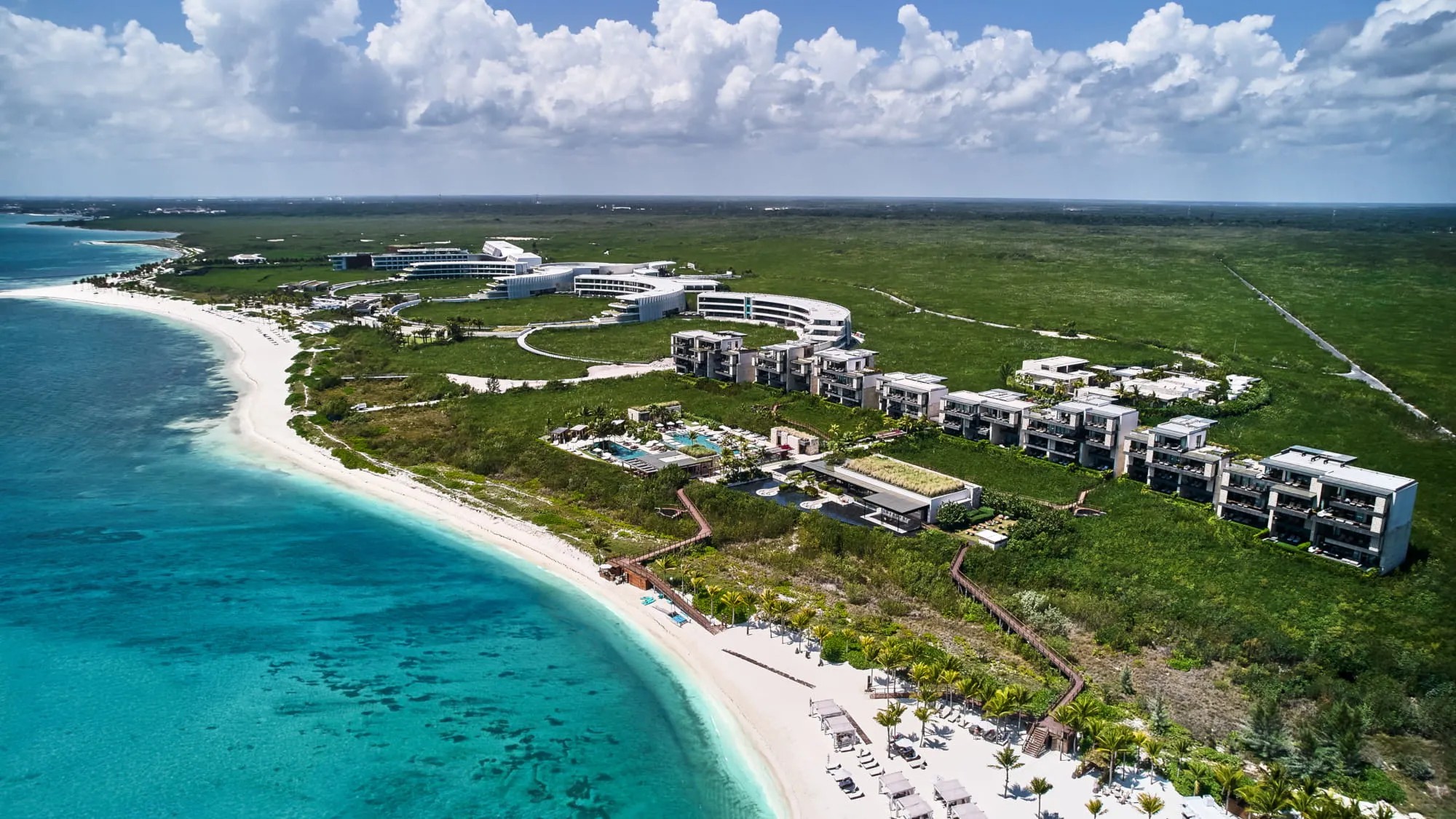
The properties located in the Kanai complex, north of Playa del Carmen, are probably the most obvious example. There, depending on the viewing angle, the architecture sometimes seems to disappear into the mangroves. Elevated walkways wind above the wetlands rather than destroying them. The buildings remain low and horizontal. Even the lighting seems deliberately subdued after sunset.
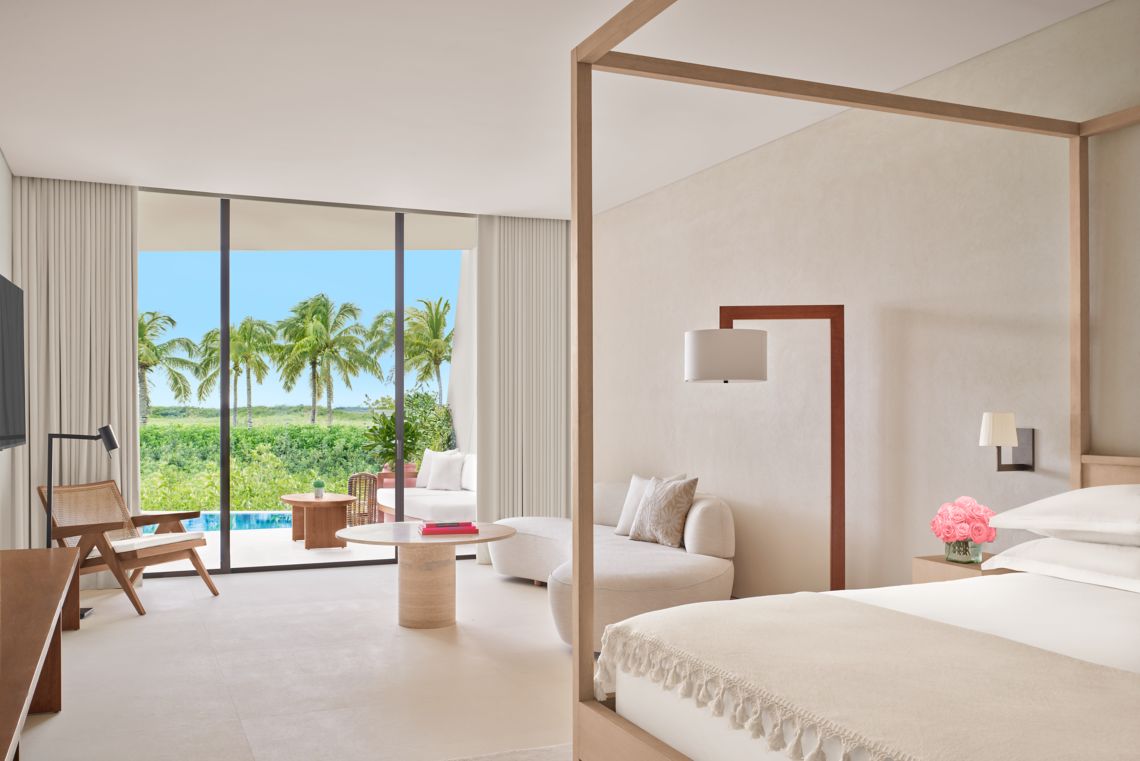
The Riviera Maya EDITION at Kanai particularly emphasizes this minimalist approach. The hotel doesn’t really seek to attract attention, which may explain why everyone is talking about it. Light-colored stone, corridors that open onto the outdoors, interiors bathed in shadows, and long, quiet spaces where literally nothing happens except for the wind rustling through the palm trees. At times, the place feels more like the Mediterranean than the classic Caribbean—and yet it works.
A few kilometers further on, the St. Regis Kanai Resort has opted for a completely different architectural approach. Its circular layout is inspired by Mayan astronomical geometry, and the result is original without being gimmicky. Seen from the sky, the resort almost looks like a futuristic observatory perched above the jungle.
This balance remains difficult to achieve. Many luxury hotels talk about ’honoring local heritage« while ultimately offering an international aesthetic that could just as easily be found in Dubai or Miami. Some new properties in the Mexican Caribbean seem genuinely willing to take creative risks inspired by the region.
Not everyone succeeds perfectly. But at least they're trying something.
The Quiet End of the Ultra-Instagrammable Tulum Aesthetic
Tulum has profoundly transformed the’luxury hotels in Mexico, for better or for worse.
For a while, every new hotel copied the same formula: polished concrete, handmade pendant lights, macramé everywhere, vaguely spiritual branding, and cocktails served in deliberately imperfect ceramic cups. It had become so recognizable that some resorts looked like they’d been plucked from the same Pinterest board.
Today, I'm starting to feel some eye strain.
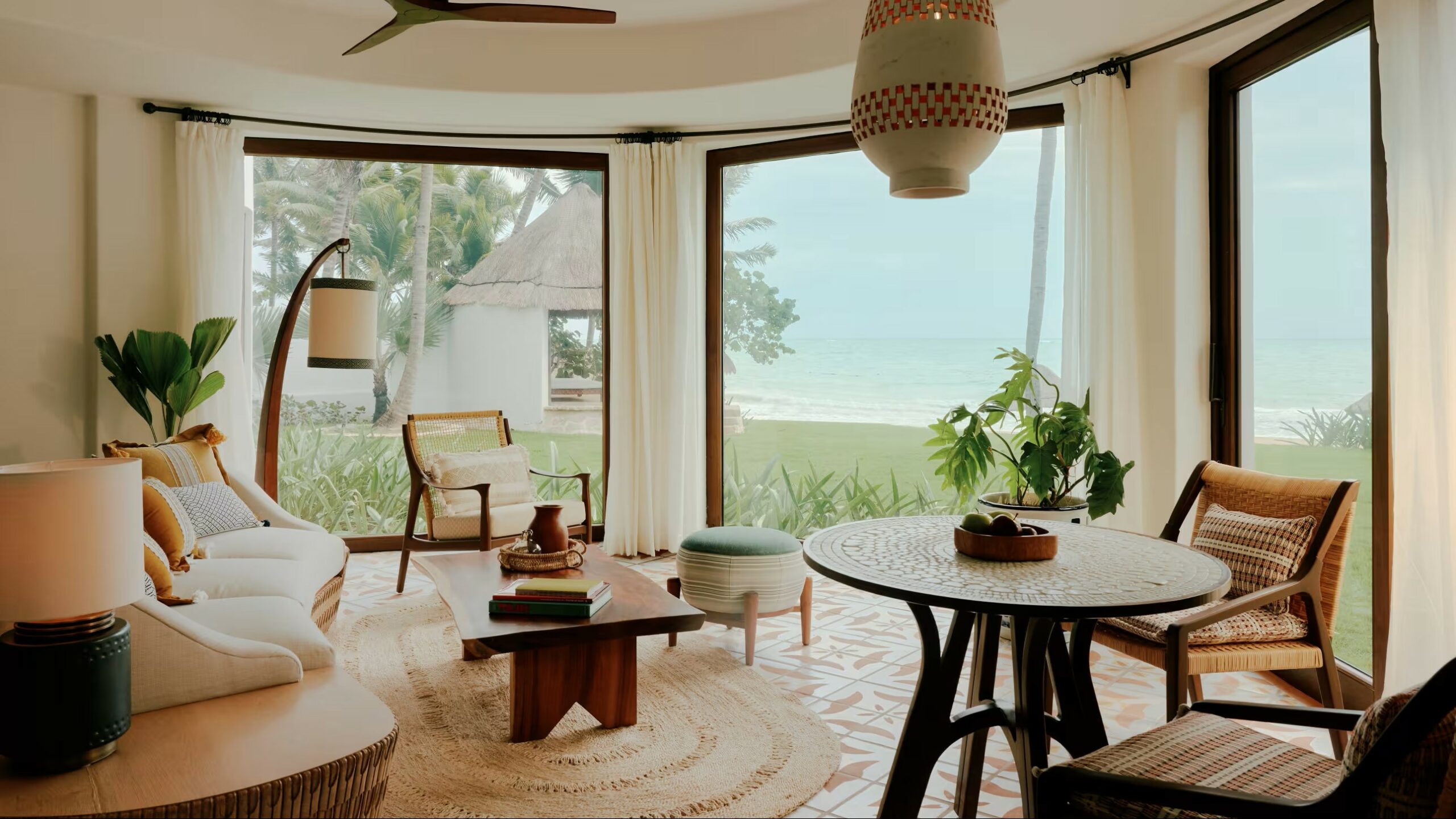
Several new luxury hotels are moving away from this over-the-top bohemian style in favor of a softer, more timeless aesthetic. Fine woods rather than artificially aged driftwood. Fresher color palettes. Better acoustics. Less showy minimalism.
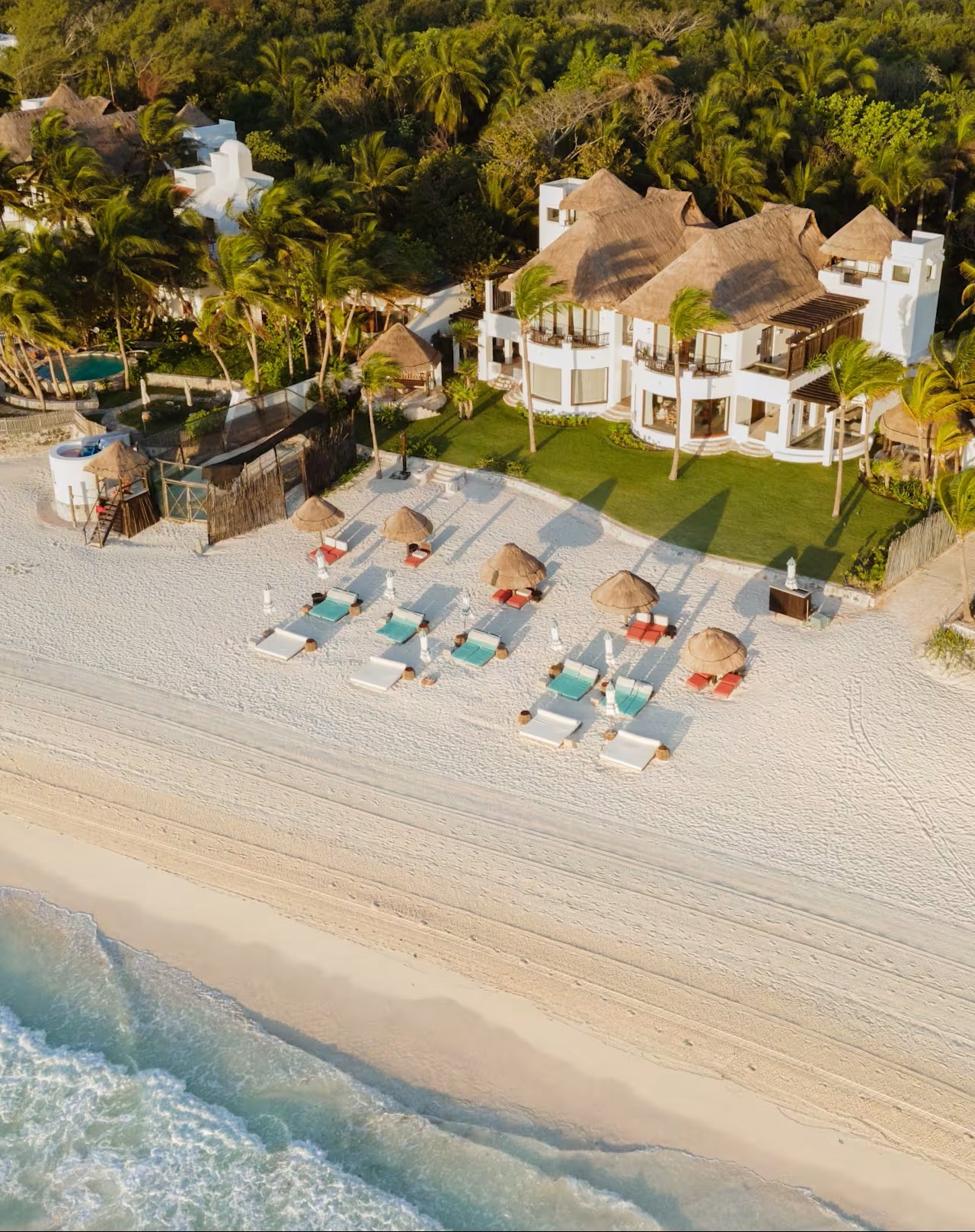
Maroma, A Belmond Hotel, is probably one of the best examples of this evolution. Following its renovation, the property has maintained its connection to the landscapes of the Riviera Maya while eliminating many of the visual clichés that dominated luxury beachfront design in the late 2010s. Local craftsmanship remains important, but it appears to be naturally integrated into the space rather than displayed as if in a showroom.
We’re also seeing a rise in “emotional design” rather than “Instagram design.” The term may sound a bit abstract, to be sure, but it becomes clear when you stay at these hotels. The rooms are quieter. The lighting is warmer—less conducive to taking photos. Restaurants seem to be paying attention to noise levels again.
Curiously enough, some of the most luxurious spaces now look almost understated in photos. And that’s probably intentional.
Hotels that are more like private residences
Another trend currently evident in the Mexican Caribbean is the gradual disappearance of the «big resort» atmosphere.
A surprising number of new high-end hotels are deliberately adopting a more residential feel. Fewer rooms. More secluded pathways. Libraries instead of huge entertainment areas. Travelers looking for DJs and pool parties already know where to go, and these hotels are clearly targeting a different audience.
Etéreo, an Auberge Collection property, pulls this off particularly well. The architecture feels tactile, deeply connected to natural materials without ever feeling rustic. The common areas almost resemble an impeccably designed private home by the sea.
Then there’s La Casa de la Playa, which barely resembles a traditional hotel. The place can feel theatrical at times—with hidden passageways, art installations, and dramatic lighting—yet it remains surprisingly intimate thanks to its small size. Some travelers fall in love with it right away. Others find the whole experience a bit too staged. Both reactions are understandable.
It's no coincidence that readers who are more interested in Mexico's most luxurious hotels are increasingly turning to these smaller, design-focused properties rather than the old mega-resorts. The very definition of luxury hospitality in the region seems to be shifting toward greater intimacy, architecture, and sensory experiences rather than overt ostentation.
Honestly, some of these new hotels seem almost designed for travelers who are tired of luxury itself.
When Sustainable Design Stopped Looking Rustic
For a long time, eco-friendly hotels in tropical destinations had a very distinctive aesthetic: raw textures, bathrooms that opened onto the outdoors, and fans instead of air conditioning. There was an implicit assumption that sustainability necessarily required sacrificing comfort.
That equation has changed a lot.
New luxury hotels in the Mexican Caribbean are now incorporating sustainability into their design processes in ways that are almost imperceptible. Elevated structures protect the mangroves. Natural ventilation reduces energy needs. Local vegetation replaces imported decorative landscaping.
And yet, the place remains incredibly luxurious.
A report in *Le Monde* also highlighted how the boutique hotel projects in the Yucatán region are increasingly blending design, local craftsmanship, and environmental awareness, rather than treating these elements separately. The change is as much cultural as it is architectural.
This influence is now clearly evident in the new developments along the Riviera Maya.
Even the materials are changing. More locally sourced stone. Handcrafted wood. Less imported, high-gloss marble. Some hotels seem deliberately imperfect in small details, which, strangely enough, makes them even more valuable.
Luxury travelers have become surprisingly sensitive to anything that feels artificial. People immediately notice when a hotel could be located anywhere in the world.
Why This Moment Feels Different
The Mexican Caribbean has always had a beautiful sea. That has never been the problem.
What has changed is the very maturity of the hospitality scene. The region finally seems confident enough that it no longer needs to compensate with constant spectacle. Designers are placing greater trust in atmosphere. In space. Even in silence.
And travelers seem ready for that.
Somewhere along the way, luxury hospitality ceased to be about visible excess and became more of a psychological matter. People are looking for places that can lower their heart rate within ten minutes—places where the architecture complements the landscape rather than competing with it.
The most interesting hotels currently opening in the Riviera Maya seem to understand this instinctively.
Of course, not all of them will age well. Trends in the hospitality industry change rapidly. Some of these minimalist resorts may eventually come to seem very much tied to the aesthetic tastes of this decade. That always happens.
But despite everything, this new wave of design-focused openings in the Mexican Caribbean seems less superficial than the region’s previous hotel booms. It seems more deeply rooted. More focused on long-term sustainability.
And honestly, after years of luxury resorts trying to impress everyone at once, there’s something quite refreshing about these hotels that seem perfectly comfortable with simply being quiet.